
The global sports drink market has grown beyond professional athletics into a fast-expanding functional beverage category driven by health-conscious consumers, fitness culture, and hydration trends.
For beverage brands, importers, private label buyers, and OEM clients, understanding market size, consumer behavior, product innovation, and packaging trends is essential to staying competitive. This blog explores key market insights, growth opportunities, and emerging trends shaping the future of the global sports drink industry!
Global Sports Drink Market Size & Forecast
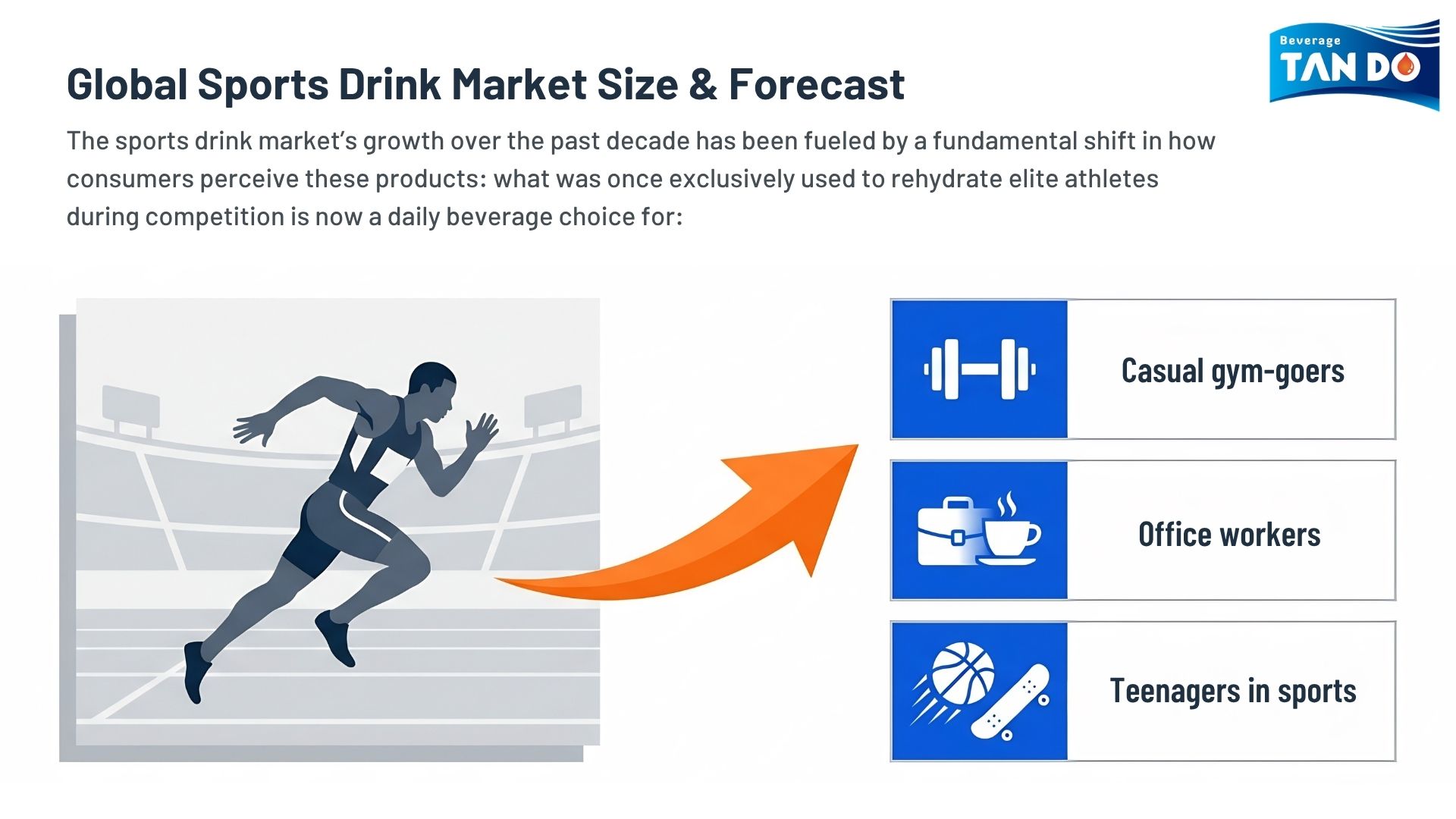
The sports drink market’s growth over the past decade has been fueled by a fundamental shift in how consumers perceive these products: what was once exclusively used to rehydrate elite athletes during competition is now a daily beverage choice for:
- Casual gym-goers
- Office workers seeking an energy boost
- Teenagers engaging in recreational sports


Short-Term Growth Forecast (2026-2031)
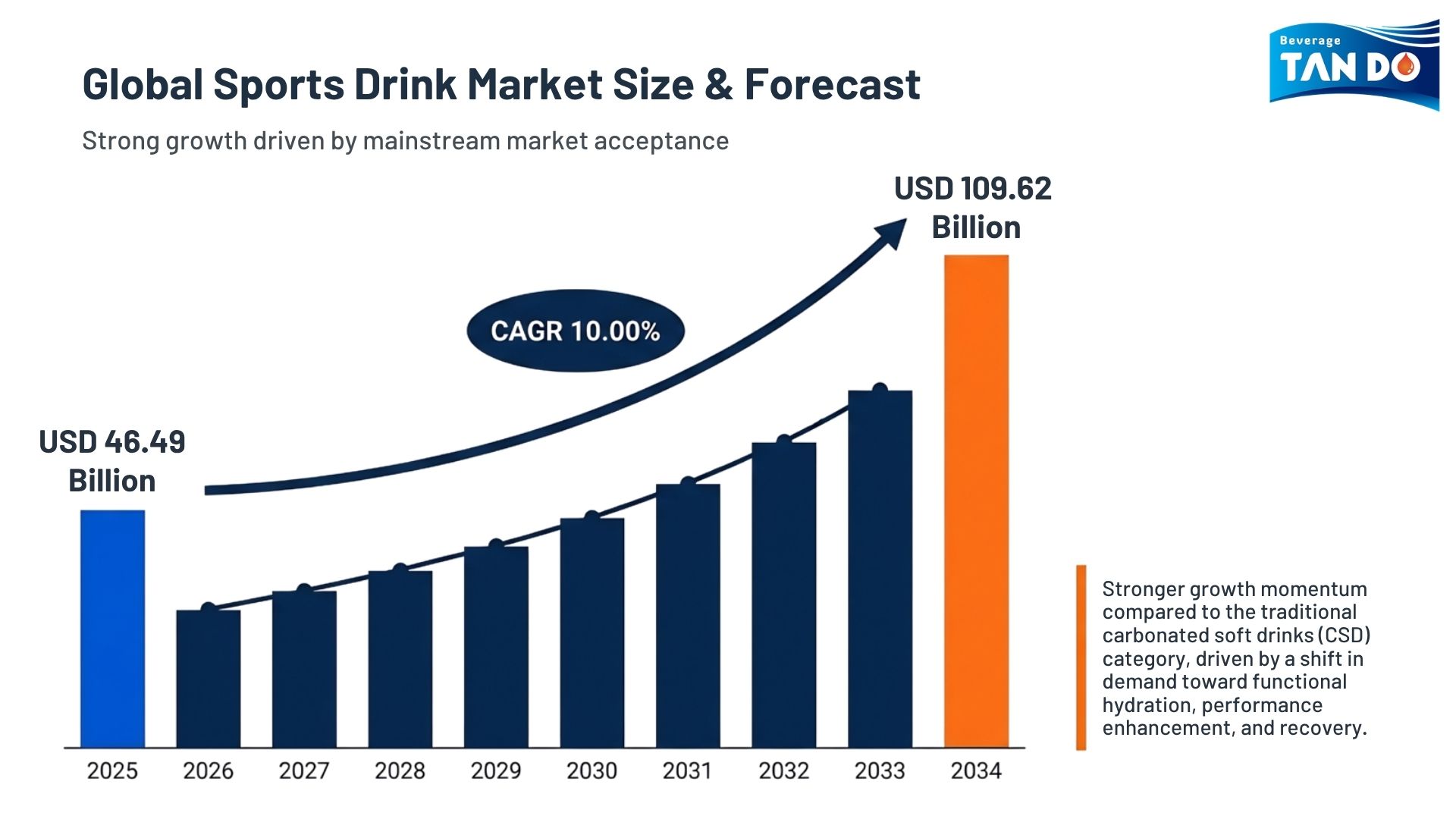
This mass market adoption has translated into robust revenue growth, with the global sports drink market valued at approximately USD 46.49 billion in 2025, according to data from Statista and industry analysis firm Grand View Research.
The market is projected to grow at a compound annual growth rate (CAGR) of 10.00% from 2026 to 2034, reaching USD 109.62 billion by the end of the forecast period.
This strong growth significantly outpaces the broader carbonated soft drinks (CSD) category. As consumers increasingly shift toward functional hydration beverages that offer performance, wellness, and recovery benefits beyond traditional soft drinks.


Regional Market Breakdown
1. North America
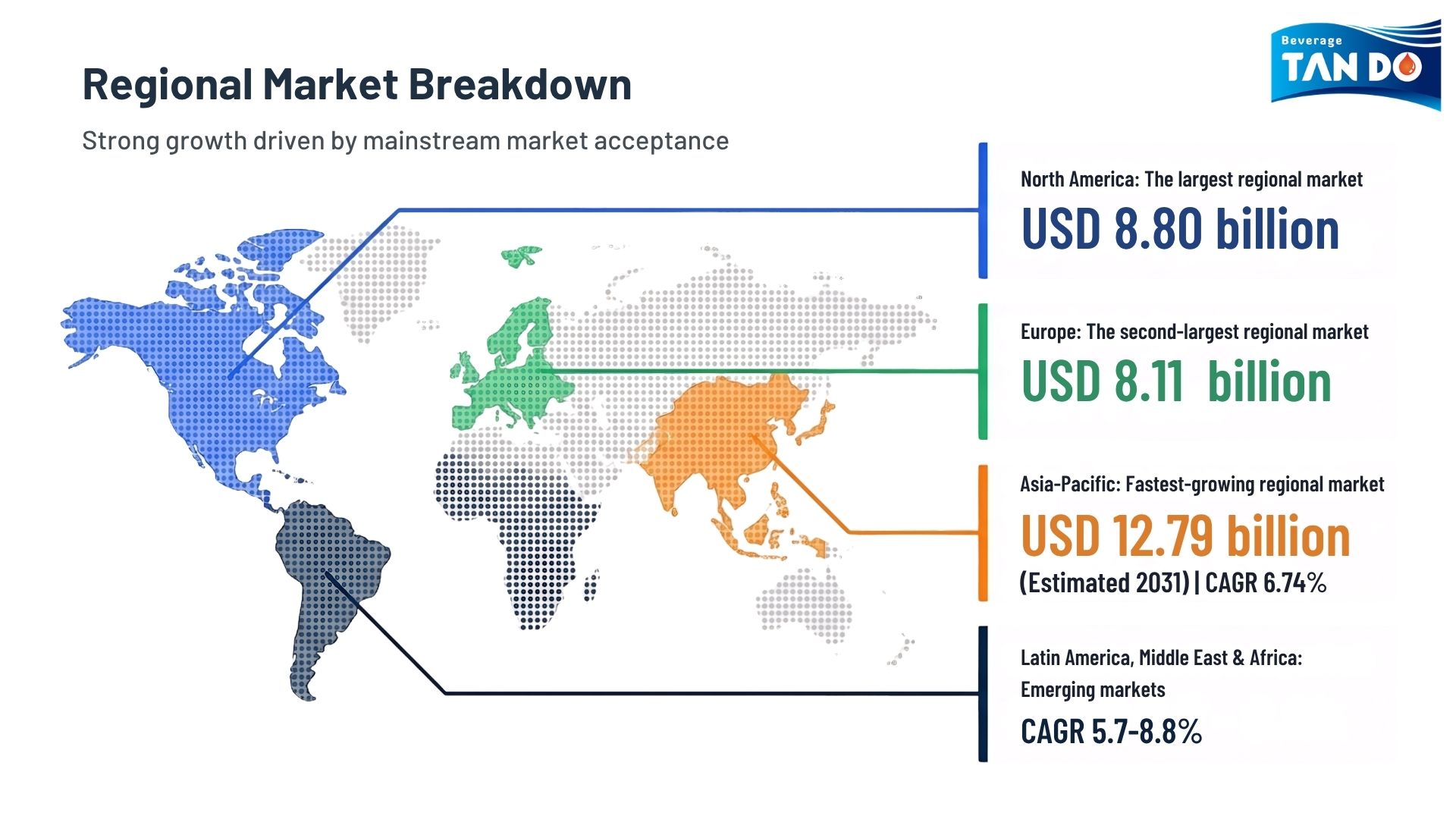
The largest regional market, accounting for 33.54% of total market share, valued at USD 8.80 billions 2025. The U.S. dominates this region, driven by high rates of gym membership, a long-standing culture of sports participation.
2. Europe
The second-largest regional market, with a 2025 valuation of USD 8.11 billion. Western European markets (Germany, the UK, France) leads demand for natural, clean-label sports drinks.
Europe’s strict regulations on sugar content in beverages have also accelerated the shift to low-sugar formulations, creating opportunities for innovative manufacturers.
3. Asia-Pacific (APAC)
The fastest-growing regional market, projected to grow at a CAGR of 6.74% over 2025-2031. The market is expected to reach USD 12.79 billion by the end of the forecast period. Key growth drivers include rising disposable incomes in emerging markets such as Vietnam, Indonesia, and India.
4. Latin America, Middle East & Africa
These emerging markets are also recording strong growth. Latin America is expected to grow at a CAGR of approximately 6–6.4%, while the Middle East & Africa region is projected to grow at around 5.7–8.8%. This growth is driven by urbanization and increasing sports participation.


Key Market Trends Shaping the Sports Drink Category in 2026 and Beyond
To succeed in the competitive sports drink market, B2B stakeholders must align their product offerings with the key consumer and industry trends that are redefining the category.
1. Clean Label and Low-Sugar Formulations
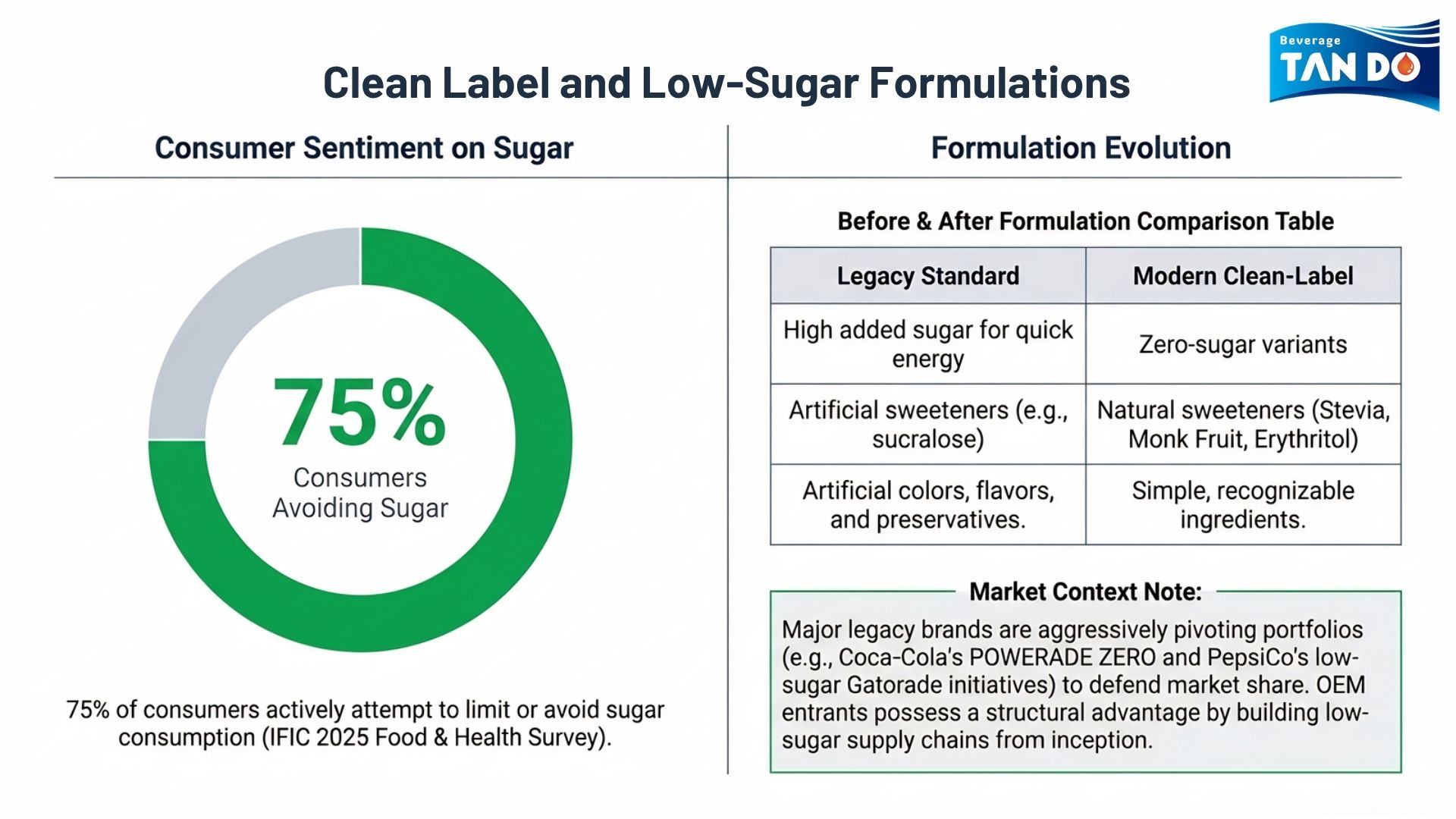
The biggest shift in consumer preferences over the past five years has been the demand for clean-label, low-sugar sports drinks. Historically, leading sports drink brands relied on high sugar content to deliver quick energy, but modern consumers are increasingly wary of added sugars, which have been linked to obesity, diabetes, and other chronic health conditions
According to the International Food Information Council (IFIC) 2025 Food & Health Survey, 75% of consumers are actively trying to limit or avoid sugar consumption. This highlighs the strong shift toward healthier beverage choices


In response, brands are reformulating their products to reduce sugar content, with many launching zero-sugar variants that use natural sweeteners like stevia, monk fruit, and erythritol instead of artificial sweeteners like sucralose.
Clean-label trends also extend to ingredient lists: consumers are demanding products with simple, recognizable ingredients, free from artificial colors, flavors, and preservatives.
For example, The Coca-Cola Company has continued expanding its zero-sugar Powerade portfolio through products such as POWERADE ZERO. While PepsiCo has increased focus on low-sugar and functional hydration products under the Gatorade brand. According to Innova Market Insights, “low/no sugar” remains one of the leading global beverage innovation trends, particularly within functional and sports hydration categories.
For OEM and private label stakeholders, this trend creates an opportunity to differentiate their offerings by developing clean-label formulations that meet consumer demand. Unlike legacy brands that may face challenges reformulating existing products, new market entrants can build their product lines around low-sugar, natural ingredients from the outset.
2. Targeted Functional Benefits
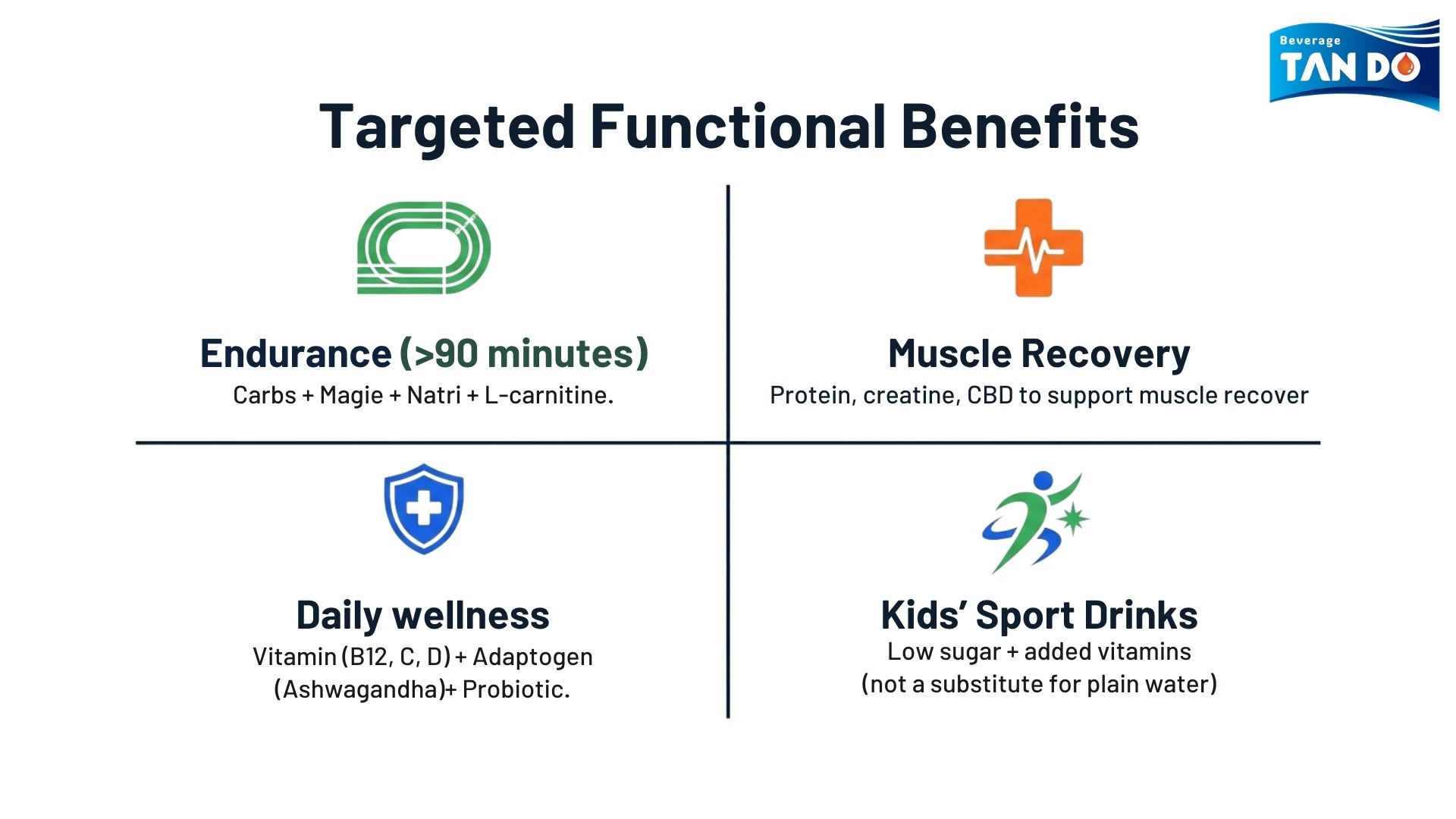
Today’s sports drink consumers are no longer a monolithic group. They have diverse needs based on their activity level, age, and health goals. This leads to a rise in specialized sports drinks that offer targeted functional benefits beyond basic hydration and electrolyte replacement. Key segments of specialized sports drinks include:
Endurance sports drinks
Formulated for long-distance runners, cyclists, and triathletes, these drinks include added carbohydrates, sodium, and magnesium to sustain energy levels during activities lasting longer than 90 minutes. Many also include added amino acids like L-carnitine to support fat metabolism.
Post-workout recovery drinks
These drinks include added protein (usually whey or plant-based), creatine, and CBD to support muscle repair and reduce inflammation after intense exercise. The global post-workout recovery drink segment is projected to grow at a CAGR of approximately 7.1% to 7.5% through 2033.
Daily wellness sports drinks
Formulated for casual users who drink sports drinks as a daily hydrator, not just after exercise. These drinks include added vitamins (B12, C, D), adaptogens like ashwagandha to reduce stress, and probiotics to support gut health.
This segment is the fastest-growing in the sports drink market. It expands the category’s addressable audience beyond active athletes.
Kids’ sports drinks
Formulated with low sugar and added vitamins to support healthy growth. They target parents of children in recreational sports.
Market players are careful to position these products as hydrators for active children, not as a replacement for water, to avoid regulatory backlash.


3. Plant-Based, Vegan and Non-GMO Formulations
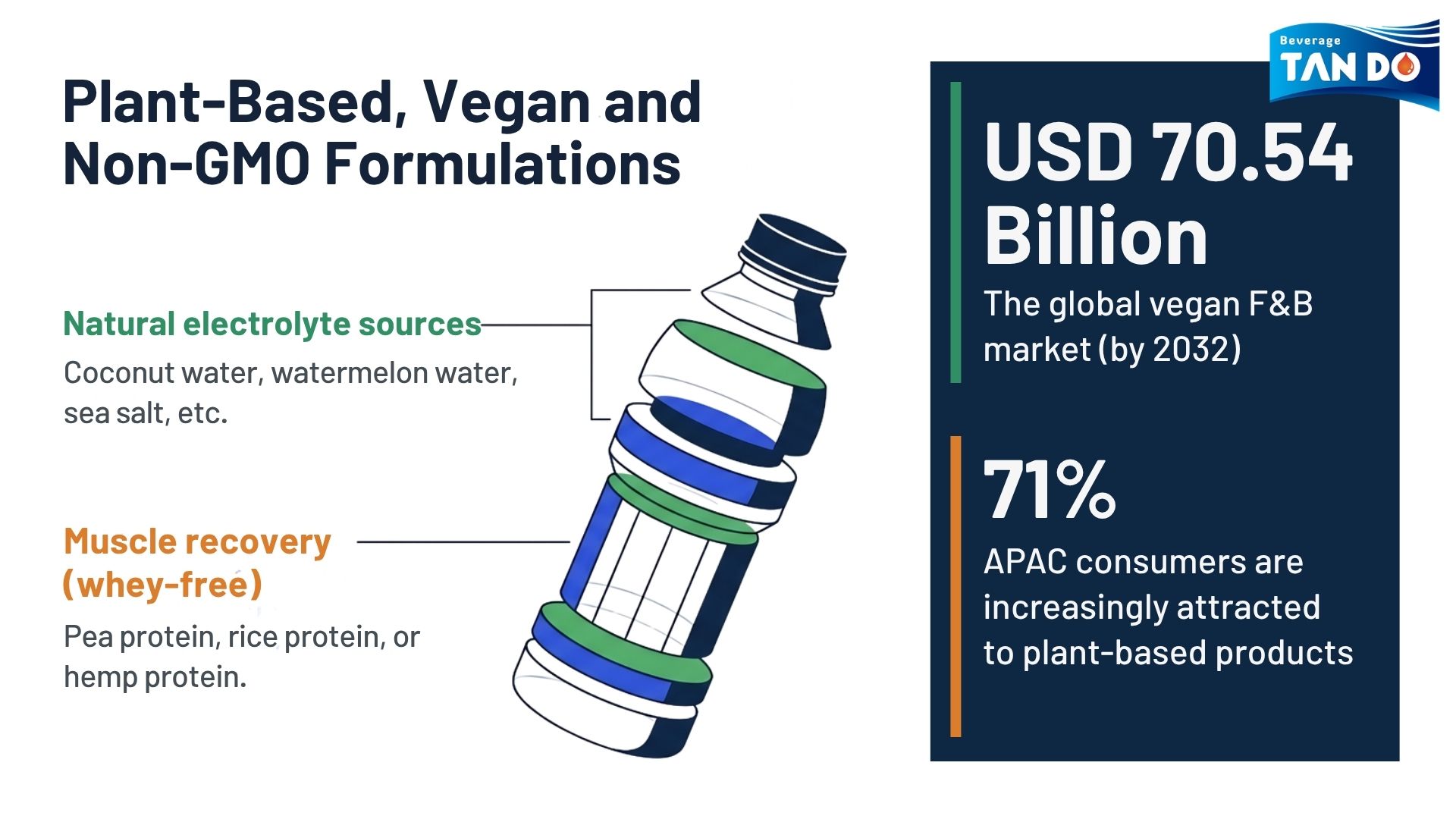
The global vegan food and beverage market is projected to reach USD 70.54 billion by 2032, and the sports drink market is no exception to the rise in plant-based demand.
Consumers increasingly prefer sports drinks with plant-based formulations, as they avoid animal-derived ingredients such as whey protein and honey. They are also increasingly paying attention to Non-GMO labels, as part of a broader shift toward natural and transparent ingredient sourcing.


Plant-based sports drinks often use coconut water, watermelon juice, or sea salt as natural sources of electrolytes. They also incorporate plant-based proteins such as pea, rice, or hemp to support muscle recovery. For B2B clients, developing plant-based sports drinks opens up access to a fast-growing demographic of consumers who are willing to pay a premium for vegan-certified products.
In APAC markets such as Vietnam and Thailand, plant-based beverages are becoming increasingly mainstream due to growing consumer interest in health and sustainability. According to Tetra Pak, 71% of consumers find plant-based products appealing, highlighting strong market potential for plant-based sports drinks.
Packaging Trends in the Sports Drink Market
Packaging is a critical factor in the success of any beverage product. The sports drink market is seeing significant innovation in packaging design, materials, and sustainability, as consumers and regulators demand more environmentally friendly packaging solutions.
For B2B stakeholders, choosing the right packaging format can be a key differentiator. As it impacts product shelf life, transportation costs, consumer appeal, and environmental footprint.
Aluminum Cans: The Fastest-Growing Packaging Format for Sports Drinks
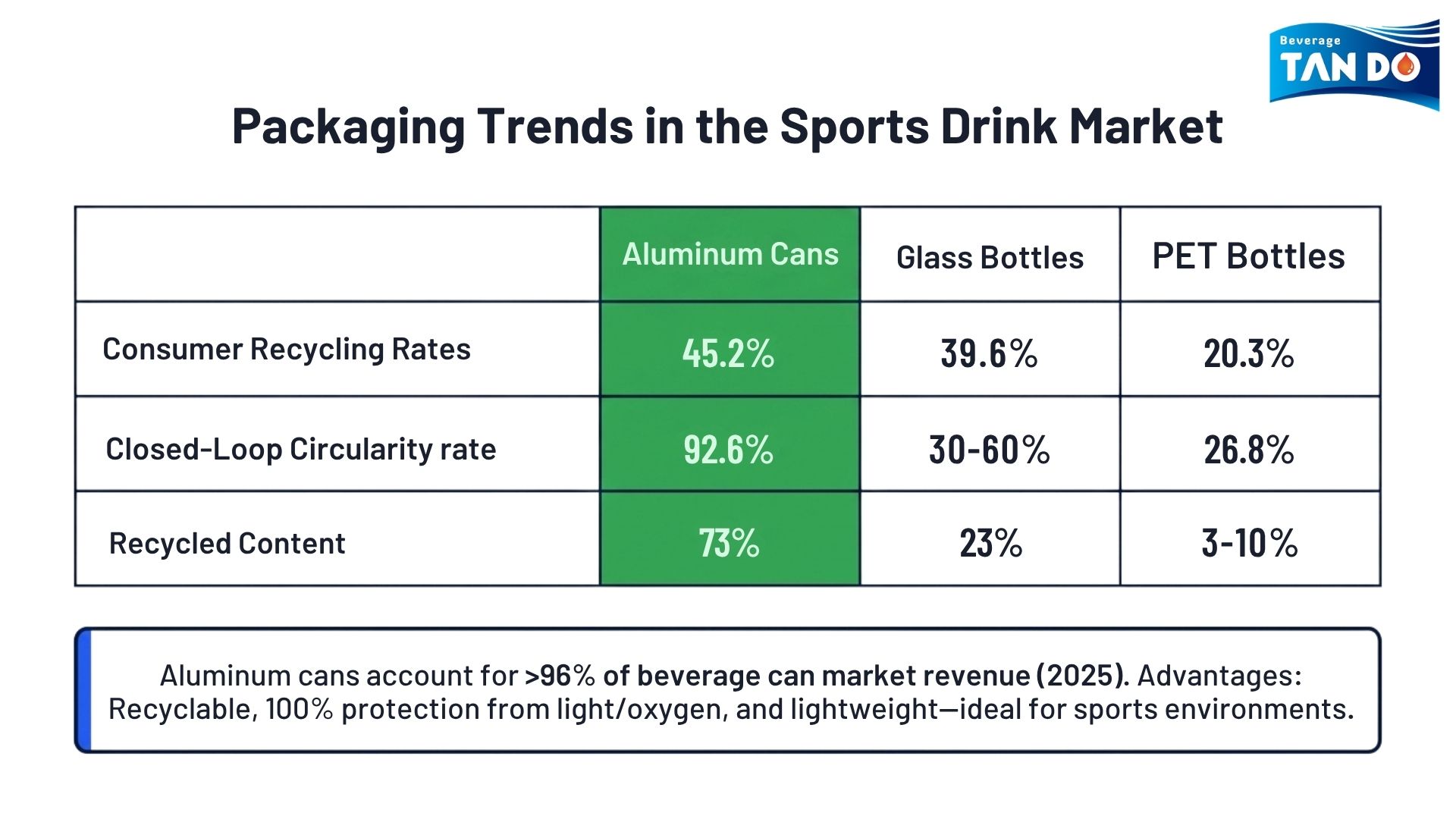
Aluminum cans have emerged as the preferred packaging format for many new sports drink brands. According to Grand View Research, the aluminum segment accounted for over 96% of global beverage can market revenue in 2025.
There are several key reasons for the popular of aluminum cans in the sports drink market:
- Sustainability: Aluminum is the most recycled packaging material in the world. According to The Aluminum Association, approximately 71% of aluminum beverage cans are recycled globally, compared with 34% for PET bottles and 40% for glass bottles. Aluminum cans can also be recycled infinitely without losing quality, making them a popular choice among eco-conscious consumers.
- Product protection: Aluminum cans are impermeable to light, oxygen, and moisture. This helps extend the shelf life of sports drinks and preserve the stability of active ingredients like vitamins and electrolytes. It is particularly important for functional beverages, which can lose their efficacy if exposed to light or air.
- Brand identity: Aluminum cans offer more design flexibility than PET bottles, allowing brands to print high-quality graphics, custom shapes, and even interactive elements like QR codes that link to fitness content. For emerging brands, this customization helps them stand out on crowded retail shelves.
- Convenience: Aluminum cans are lightweight, shatterproof, and easy to transport. This makes them ideal for on-the-go consumption, a key use case for sports drinks. They are also allowed in most stadiums, gyms, and public spaces where glass bottles are prohibited.
Recycling rate of aluminum cans comparing to other beverage packaging types
PET Bottles: Remaining a Dominant Format for Large-Scale Distribution
Despite the rise of aluminum cans, PET (polyethylene terephthalate) bottles remain the most widely used packaging format for sports drinks. PET bottles remain popular for several reasons:
- Low cost: PET bottles are cheaper to manufacture and transport than glass or aluminum, making them ideal for mass-market brands that sell products at low price points.
- Transparency: PET bottles are clear, allowing consumers to see the product inside, which is a key selling point for brands that use natural, colorful ingredients like fruit juice.
- Customizable sizes: PET bottles can be manufactured in a wide range of sizes, from small 250ml single-serve bottles for gyms to 1L multi-serve bottles for home use, making them flexible for different use cases.


Sustainable Packaging Innovations for Sports Drinks
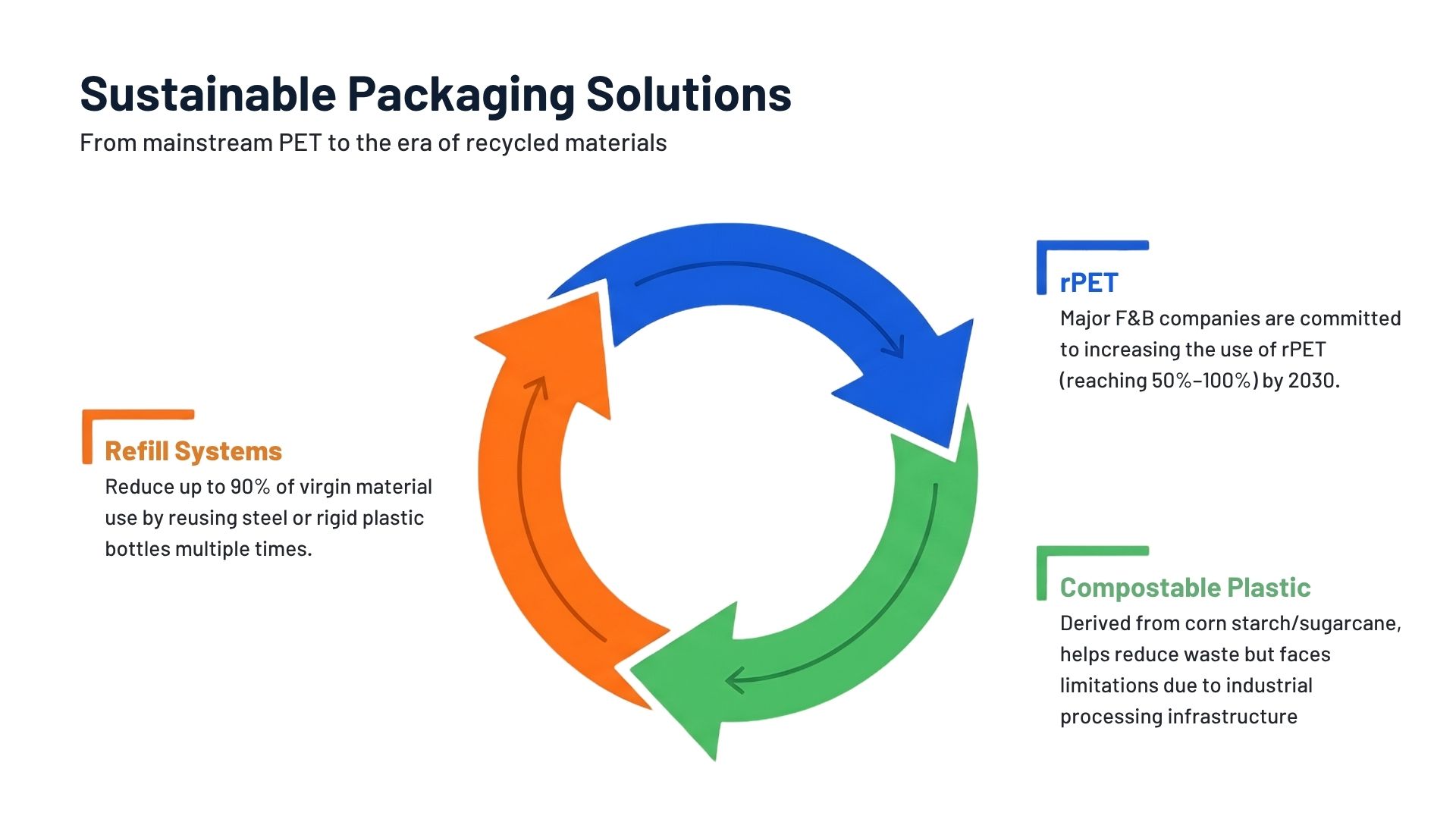
The push for more sustainable packaging has led to a wave of innovation in alternative packaging materials for sports drinks, including:
1. rPET Bottles
PET bottles are facing increasing regulatory and environmental pressure due to concerns over plastic waste. As a result, many beverage manufacturers are investing in recycled PET (rPET) materials to improve packaging sustainability.
Major beverage companies such as Coca-Cola and PepsiCo have announced targets to significantly increase the use of recycled PET in their packaging by 2030. Some products already using bottles made from 50% or 100% recycled plastic materials.
2. Compostable plastics
Made from plant-based materials like corn starch or sugarcane, compostable plastics break down in industrial composting facilities, reducing plastic waste. However, challenges remain around the availability of industrial composting infrastructure, limiting the widespread adoption of this format.
3. Refillable packaging
Refillable packaging is also emerging as a sustainable trend in the beverage industry. Consumers can purchase a reusable plastic or stainless steel bottle and refill it with concentrate or at refill stations in gyms and supermarkets.
According to refillable packaging studies, reusable bottle systems can reduce the use of virgin packaging materials by up to 90% compared with single-use packaging formats when bottles are repeatedly reused.
For B2B stakeholders, flexible packaging solutions are critical to meet diverse market needs. Brands may choose aluminum cans for eco-conscious niches or PET bottles for mass distribution. So, partnering with a manufacturing partner that can support multiple packaging formats is a big competitive advantage.

OEM and Private Label Opportunities for Beverage Brands
For private label buyers, importers, distributors, and startup brands, partnering with an experienced OEM/ODM manufacturer removes the barriers to entry in the sports drink market. This allows you to launch high-quality products without investing in their own manufacturing facilities.
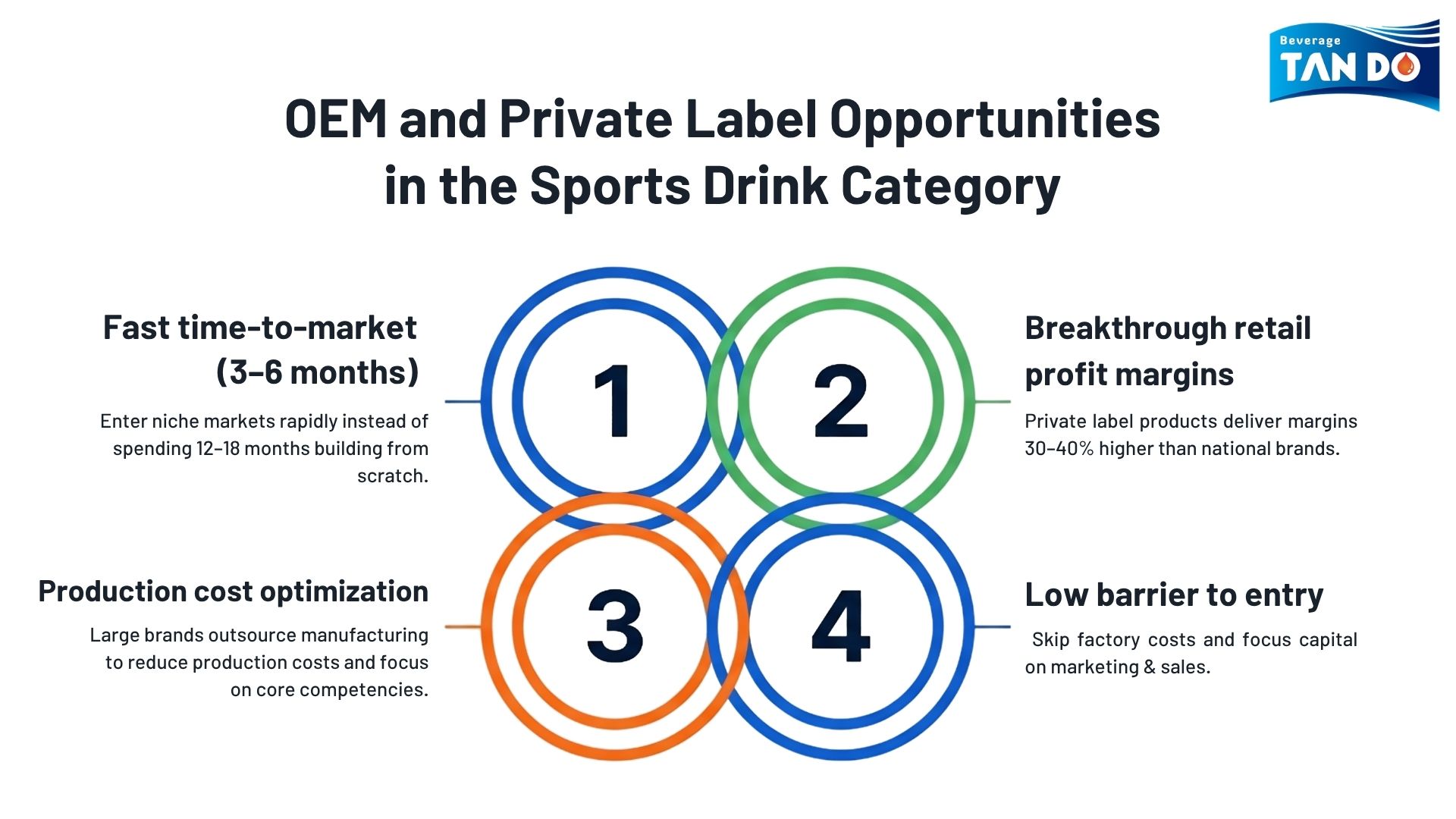
Several factors are driving the growth of OEM and private label sports drinks:
1. Low barrier to entry for new brands
Functional drink startups and local brands often lack the capital to build their own manufacturing facilities. Therefore, partnering with an OEM allows them to launch products with a much lower upfront investment.
OEM handles all aspects of production, from formulation to packaging to quality control, allowing startups to focus on marketing and sales.
2. Breakthrough retail profit margins
Supermarkets and e-commerce platforms are increasingly launching their own private label beverage lines to capture higher margins than they earn from selling third-party brands.
Private label sports drinks typically offer retailers a 30-40% higher margin than national brands, making them an attractive addition to retail portfolios.
3. Production cost optimization
Even large international beverage brands are increasingly outsourcing non-core production to OEMs. This allow them to reduce manufacturing costs and focus on their core brand marketing activities.
This trend has created a large market for OEMs that can meet international quality standards and scale production to meet global demand.
4. Fast time-to-market (3–6 months)
Brands need to be able to launch new products quickly to capitalize on emerging trends. OEM/ODM partnerships enable fast formulation and production turnaround. This allows brands to bring new products to market in as little as 3–6 months. In contrast, in-house development typically takes at least 12–18 months.


Why Choose Tan Do Beverage?
Partnering with an experienced OEM/ODM beverage manufacturer offers a range of benefits for B2B stakeholders:
- Custom formulation expertise: We have professional in-house R&D teams that can develop custom formulations tailored to a brand’s specific needs.
- Scalable production capacity: We can scale production from small batch runs for startup brands to large-scale production runs for international brands that distribute to dozens of markets
- Regulatory compliance support: We meet strict international food safety regulations, including FDA, BRCGS, FSSC, HACCP, ISO, and HALAL. This ensures that our products meet all local regulatory requirements.
- End-to-end supply chain management: We handle all aspects of the supply chain, from sourcing raw materials to manufacturing to shipping, reducing the complexity for brands.
- Efficient one-stop beverage sourcing: For importers and distributors, partnering with enables beverage sourcing from a single manufacturer. This helps streamline procurement processes, improve operational efficiency, and reduce logistics costs.
Sum Up
The global sports drink market is rapidly evolving, driven by clean-label demand, functional innovation, plant-based formulations, and sustainable packaging trends. As competition intensifies, B2B stakeholders must adapt quickly to changing consumer preferences and regulatory expectations.
Partnering with an experienced OEM/ODM manufacturer is key to staying competitive. offers end-to-end beverage solutions, from custom formulation and scalable production to regulatory compliance and supply chain management, helping brands efficiently bring high-quality sports drinks to global markets.