Nectar vs Juice: What’s the Real Difference?

    When browsing beverage shelves, many consumers assume that nectar vs juice are the same. While both are fruit-based drinks, they differ significantly in composition, production standards, and nutritional characteristics. Understanding these differences helps brands make more informed choices based on taste preferences, target consumers, and dietary needs.

    In this guide, we explore the key distinctions between fruit juice and fruit nectar, including fruit content requirements, permitted ingredients, processing methods, sensory profiles, and health considerations.

    Nectar vs Juice: The Definition

    In today’s beverage market, fruit-based drinks are commonly divided into two major categories: fruit juice vs fruit nectar. To understand their differences, it is important to begin with clear definitions.

    What is fruit juice?

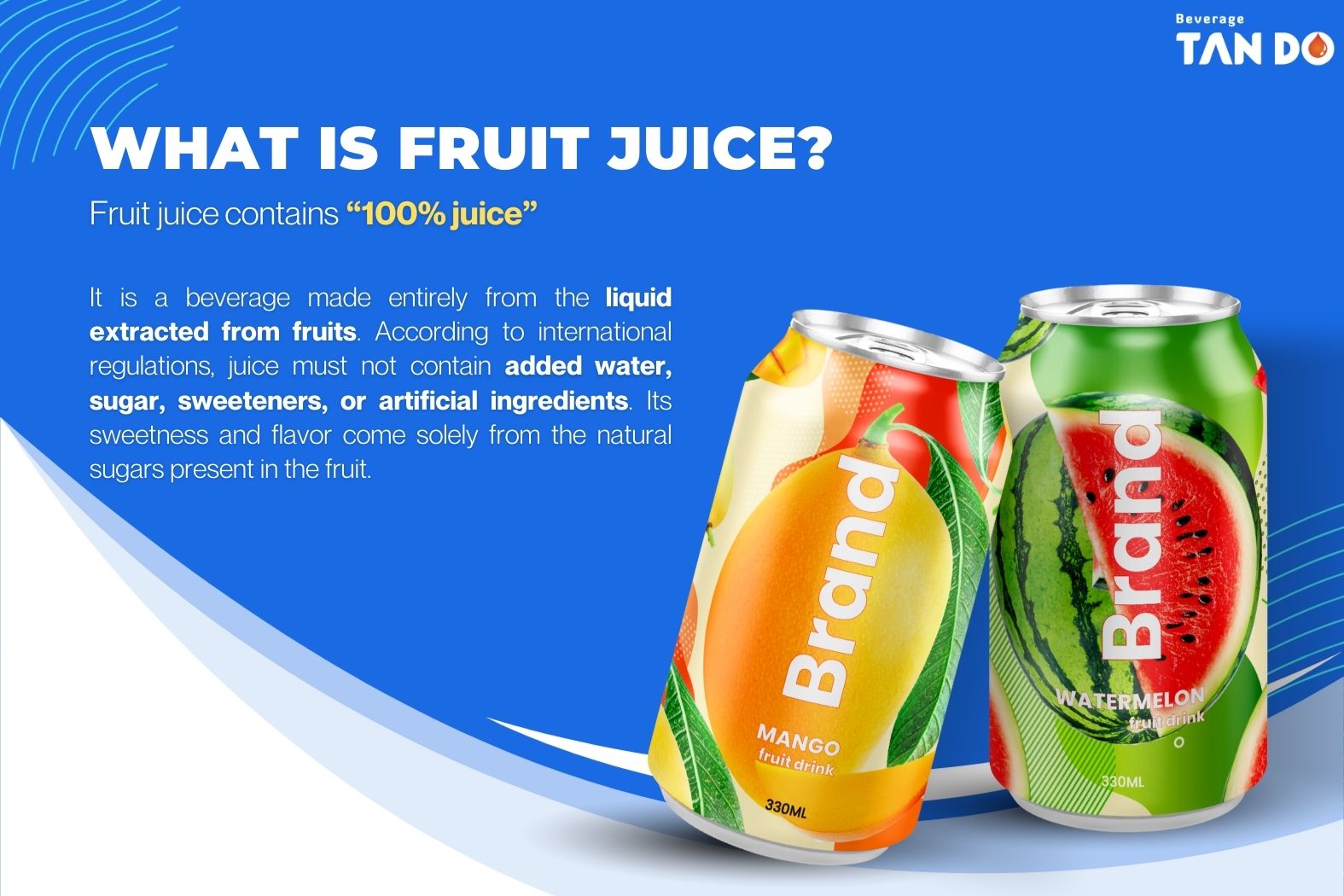
    Fruit juice, often labeled as “100% juice”, is a beverage made entirely from the liquid extracted from fruits. According to international regulations, juice must not contain added water, sugar, sweeteners, or artificial ingredients. Its sweetness and flavor come solely from the natural sugars present in the fruit.

    What is fruit juice

    Fruit juice may be produced by direct pressing or squeezing of fresh fruit, or by reconstituting juice from concentrate. In both cases, the final product must still represent 100% fruit content. When consumers see the label “100% juice,” they can be confident that the product is not diluted and contains only fruit-derived ingredients.

    What is fruit nectar?

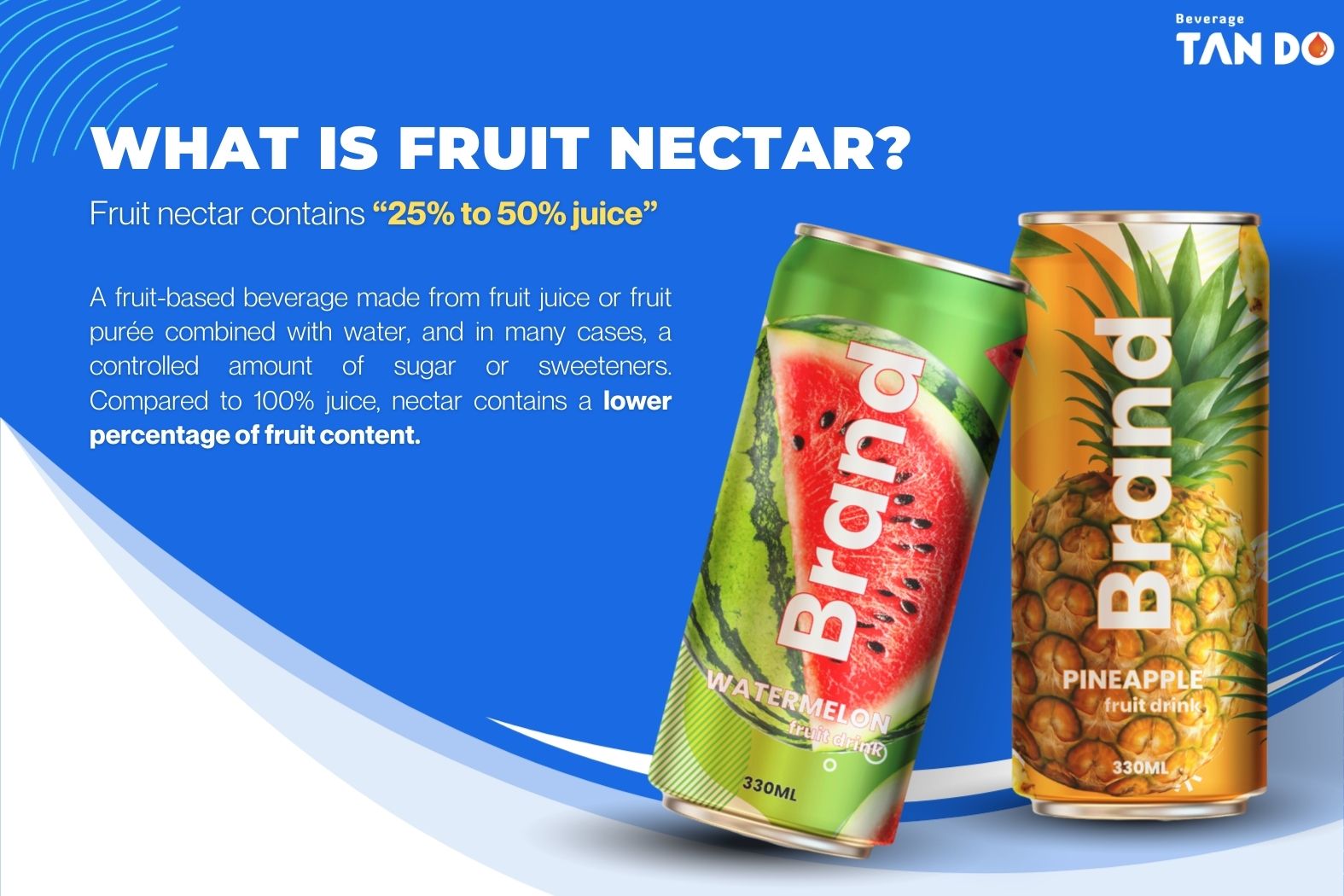
    Fruit nectar is a fruit-based beverage made from fruit juice or fruit purée combined with water, and in many cases, a controlled amount of sugar or sweeteners, depending on local regulations. Compared to 100% juice, nectar contains a lower percentage of fruit content, which varies depending on the type of fruit and regulatory standards. 

    What is fruit nectar

    Nectar drinks are widely consumed due to their smooth texture, balanced sweetness, and approachable flavor profile. They can be enjoyed on their own or used as a base for mixed beverages and culinary applications.

    5 Key Differences Between Juice and Nectar

    Although juice and nectar are both fruit-based beverages, several important factors distinguish them.

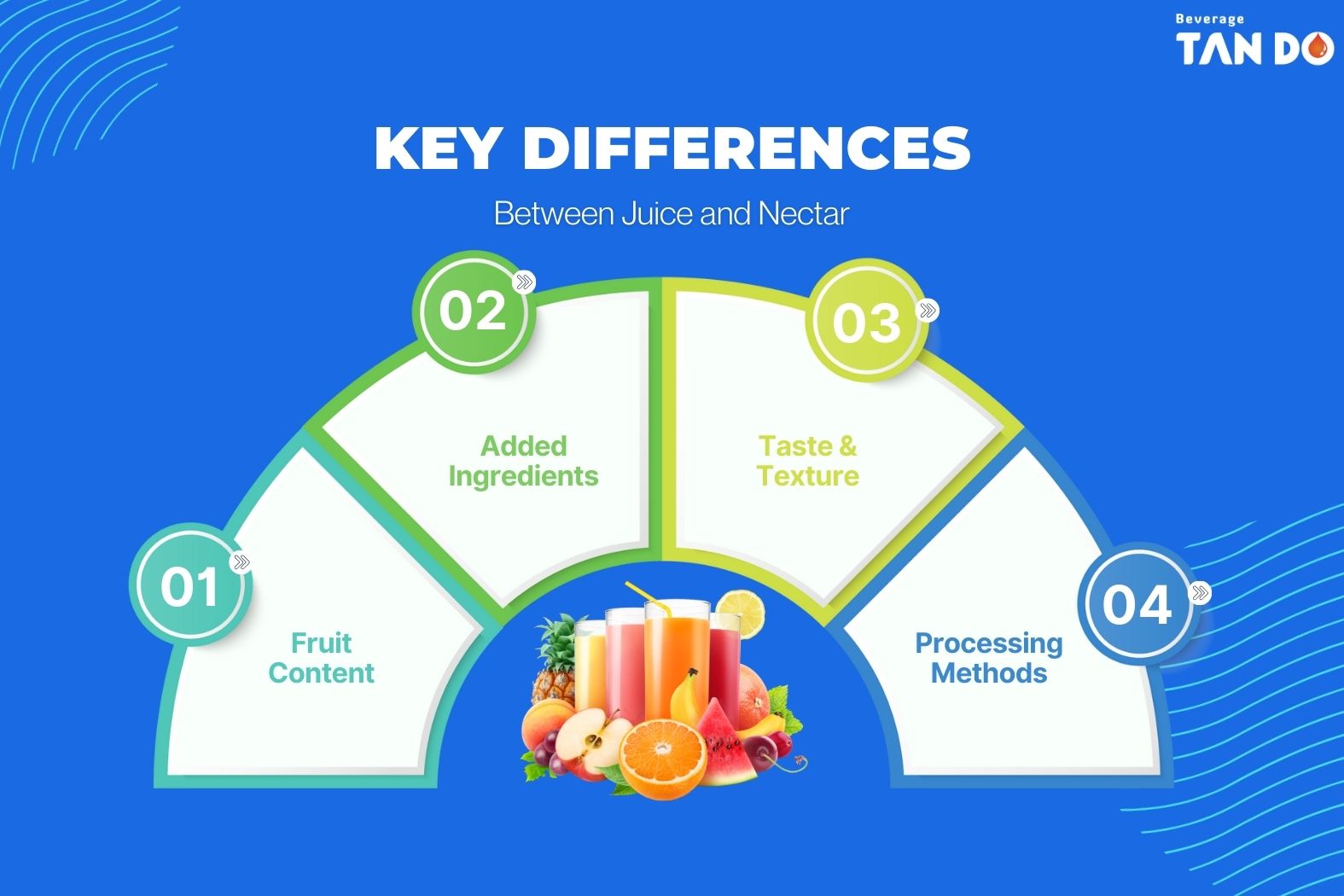
    1. Fruit Content

    The most fundamental distinction between juice and nectar lies in fruit content — how much actual fruit is in the beverage.

    Juice: 100% Fruit

    Fruit juice is defined as a beverage made entirely from the liquid extracted from the edible portion of fruit. According to international standards such as Codex Alimentarius and the EU Fruit Juice Directive, juice must contain 100% fruit content, with no added water, sweeteners, flavors, or artificial ingredients.

    Some juices are produced from concentrate, where water is removed for storage or transport and later added back. As long as no additional non-fruit ingredients are introduced, the product still qualifies as 100% juice.

    Nectar: Reduced Fruit Percentage

    Fruit nectar contains a lower percentage of fruit—typically 25% to 50%, depending on the fruit variety and local regulations. This formulation exists because certain fruits, such as mango, banana, passion fruit, or blackcurrant, are naturally too thick, acidic, or astringent to be enjoyable as pure juice. Dilution with water helps improve drinkability while preserving fruit character.

    2. Added Ingredients

    Juice: No Additives Allowed

    Fruit juice must rely solely on the fruit’s natural sugars, acids, and aroma compounds for flavor and sweetness. The addition of water, sugar, artificial sweeteners, colors, flavors, or preservatives is not permitted. This makes juice one of the most “clean-label” beverages in the market.

    Nectar: Formulated for Balance

    In contrast, nectar drinks may include:

    • Added water — to dilute concentrated fruit purée or juice
    • Sweeteners — such as cane sugar, beet sugar, honey, or approved sweetening agents
    • Acidulants or flavors — to balance taste and mouthfeel

    All added ingredients must be declared on the label and comply with food safety regulations. However, these additions can increase total sugar and calorie content.

    3. Taste & Texture

    Nectar vs juice differ significantly in the sensory experiences they deliver.

    Juice: Natural Intensity

    Juice offers a direct and unaltered expression of fruit flavor, typically with a lighter texture when pulp is removed. Because it contains 100% fruit content, the taste is often intense, vibrant, and sometimes sharp or tart—especially in citrus or naturally acidic fruits. 

    This concentrated flavor profile reflects the fruit in its purest form and is particularly appealing to consumers who value authenticity and a clean, natural fruit taste.

    Nectar: Smooth and Approachable

    Nectar provides a more balanced and indulgent mouthfeel. The inclusion of fruit purée gives nectar a thicker, smoother texture, while added sugars or permitted sweeteners create a milder, sweeter flavor.

    This formulation makes nectar more approachable, especially for fruits whose natural taste may be too strong, bitter, or complex when consumed as 100% juice.

    4. Processing Methods

    Juice Production

    Juice is typically produced through mechanical extraction methods such as pressing or centrifugation. It may be filtered (clear juice) or left unfiltered (cloudy juice). Preservation methods include pasteurization, high-pressure processing (HPP), or aseptic filling. Juice can be concentrated and reconstituted without altering its ingredient status.

    Nectar Production

    Nectar production involves blending fruit juice or purée with water to achieve a specified fruit percentage, followed by sweetening and homogenization. Pasteurization or similar treatments are applied to ensure safety and shelf stability. Because nectars often retain purée solids, they tend to be more viscous than juices.

    5 Key Differences Between Nectar vs Juice

    Regional Differences in Juice and Nectar Terminology

    The definition of juice and nectar can vary by region, making label reading especially important for international consumers and importers.

    United States and United Kingdom

    In the US and UK, fruit juice refers exclusively to beverages made from 100% fruit juice with no added water or sugar. Nectar, on the other hand, may contain added water, sweeteners, and other approved ingredients within regulated limits.

    New Zealand

    In New Zealand, terminology differs from many other markets. The term “juice” may refer to fruit drinks that contain added water and sweeteners, while “nectar” often indicates a higher percentage of pure fruit juice.

    Because of these regional differences, consumers are encouraged to review ingredient lists and fruit percentage information carefully.

    Potential Downsides

    Fruit juice typically contains little to no dietary fiber, as most fiber is removed during the extraction process. Without fiber to slow digestion, the naturally occurring fruit sugars are absorbed more rapidly into the bloodstream, which may lead to quicker spikes in blood glucose levels—particularly when consumed in large quantities or without accompanying foods.

    Fruit nectar, while often smoother and easier to drink, may present additional nutritional concerns. Due to its lower fruit concentration, nectar generally provides fewer fruit-derived vitamins, minerals, and phytonutrients per serving. The inclusion of added sugars further increases total calorie and carbohydrate intake, while fiber content remains minimal unless a substantial amount of fruit purée is retained.

    For individuals who are monitoring sugar intake, managing weight, or addressing metabolic health conditions such as diabetes, these distinctions between fruit juice vs nectar can be nutritionally significant and should be considered when choosing between the two beverages.

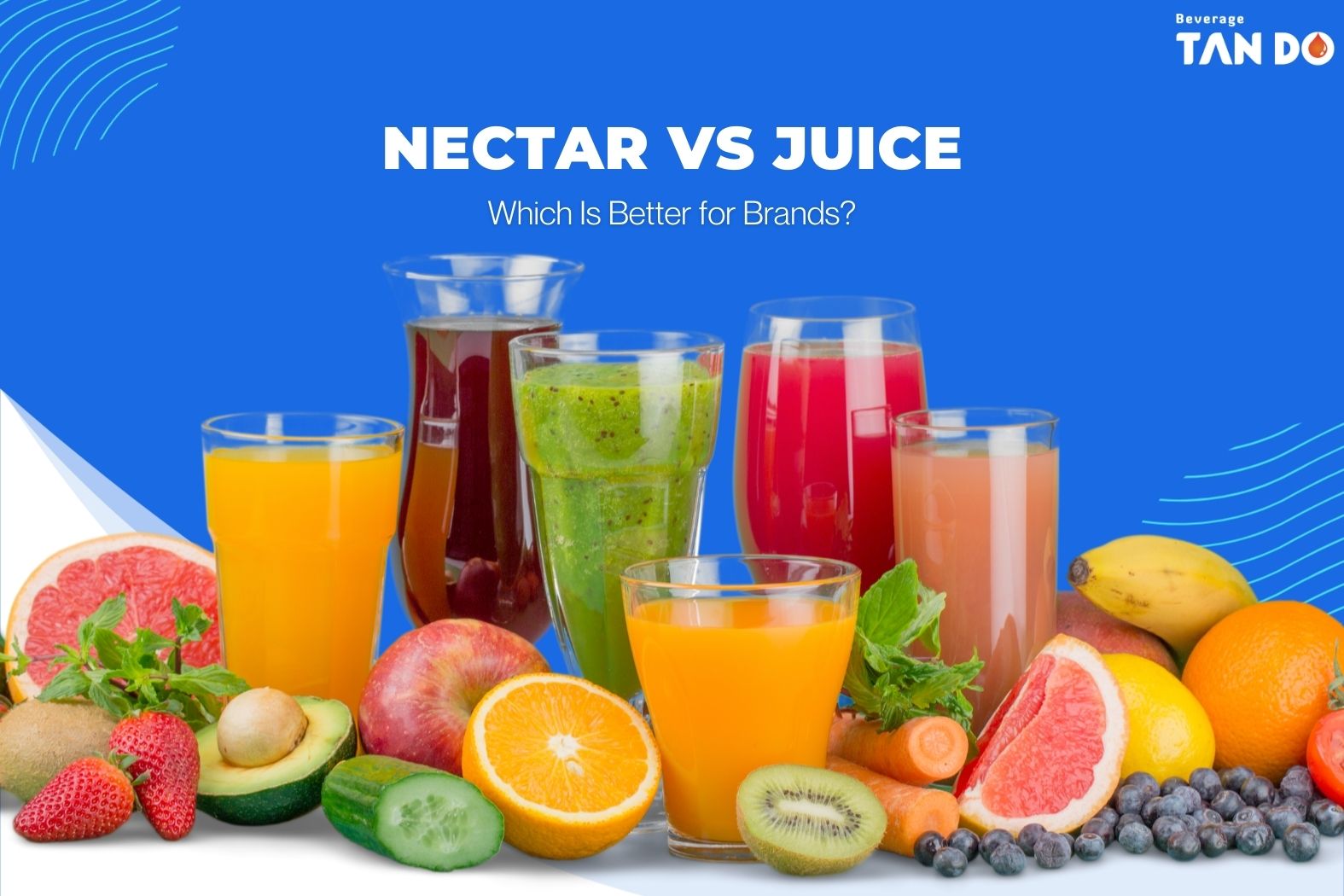
    Nectar vs Juice: Which Is Better for Brands?

    From a brand and manufacturing perspective, the choice between nectar vs juice is not simply about taste—it involves regulatory positioning, cost structure, supply chain flexibility, and target consumer segmentation. Each category offers distinct advantages depending on business objectives and market strategy.

    Juice: Premium Positioning and Clean-Label Appeal

    100% fruit juice is often associated with purity, transparency, and premium quality. Because it contains no added water or sweeteners, juice aligns strongly with clean-label trends and health-conscious consumer segments. This makes it an ideal choice for brands targeting wellness-oriented markets, export channels with strict regulations, or premium retail positioning.

    However, producing 100% juice requires a higher volume of fruit, which directly impacts raw material costs. Seasonal fruit availability, price volatility, and yield variations can also affect production planning. As a result, juice products typically carry higher price points and narrower margins unless supported by strong branding or differentiation (e.g., NFC juice, cold-pressed juice).

    Nectar: Flexibility, Cost Efficiency, and Mass-Market Reach

    Nectar offers greater formulation flexibility. By blending fruit juice or purée with water and sweeteners, brands can optimize taste, texture, and cost while maintaining consistent sensory quality year-round. This flexibility is particularly valuable for fruits that are naturally thick, acidic, or expensive to use at 100% concentration.

    From a commercial standpoint, nectar enables more competitive pricing and broader market accessibility. It is well suited for mass-market channels, emerging markets, and private-label programs where affordability, flavor consistency, and scalability are priorities.

    Strategic Considerations for Brands

    Choosing between juice and nectar ultimately depends on a brand’s positioning and target audience:

    • Brands focused on health, transparency, and premium value may favor 100% juice.
    • Brands aiming for volume growth, flavor innovation, and cost optimization often find nectar to be the more practical solution.

    Many successful beverage portfolios include both formats, allowing brands to serve different consumer needs while maximizing production efficiency and market reach.

    In the end, neither juice nor nectar is inherently “better” for brands—the optimal choice lies in aligning product format with consumer expectations, regulatory requirements, and long-term business strategy.

    nectar vs juice Which Is Better for Brands?

    Final Thoughts

    Although fruit juice and nectar are often confused, they serve different purposes in the beverage market. Juice emphasizes purity and concentrated fruit content, while nectar focuses on balance, texture, and drinkability.

    Understanding these differences allows consumers to make informed choices and enables brands to position their products accurately and transparently. Whether you choose juice or nectar, paying attention to labels and ingredients is key to selecting the beverage that best aligns with your lifestyle and expectations.


    You may also like:

    Top 8 Healthiest Fruit Juices: Nutrition Facts, Benefits & Tips

    Nectar drinks: The global position in the thriving beverage market

    Content Protection by DMCA.com
    Phuong Dang

    Leave a Reply

    Your email address will not be published.

    Xác thực trượt *