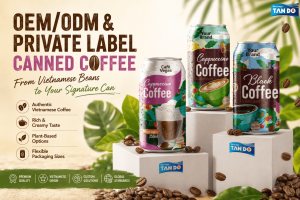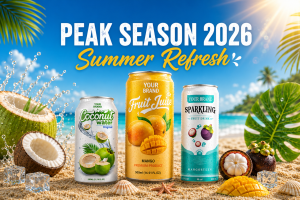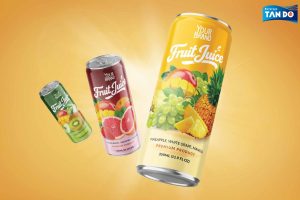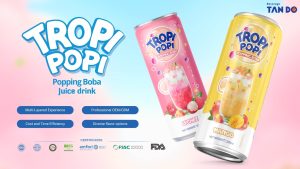
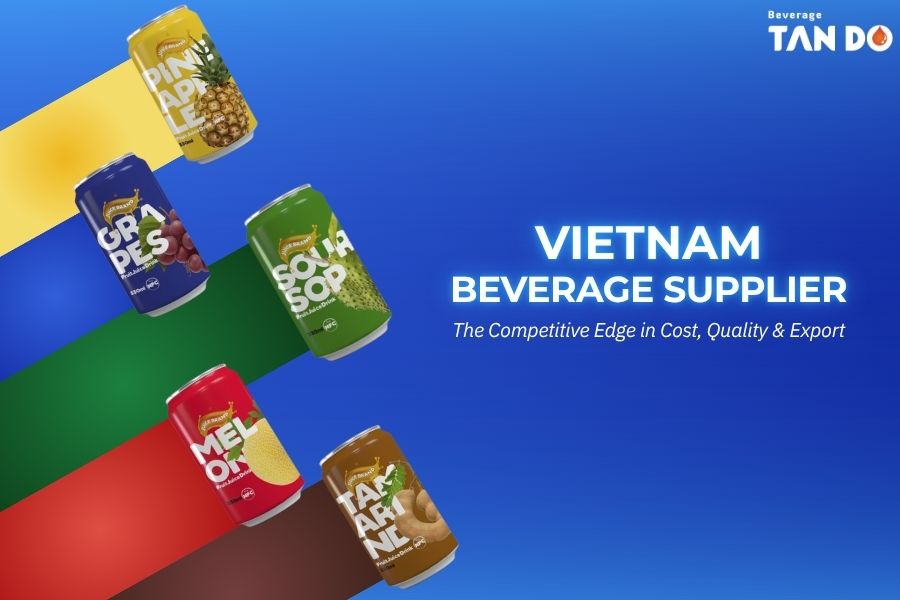
Choosing a beverage supplier in Vietnam could be your next big competitive edge. As Asia’s new hub for beverage manufacturing, Vietnam combines cost efficiency, strong quality standards, and export-ready capacity — with a market now worth over USD 5.4 billion.
In this blog, we’ll explore why Vietnam stands out as a strategic sourcing location, what you should expect from a private label beverage manufacturer, and how partnering with Tan Do Beverage can fast-track your global growth!
1. Why Global Brands Are Turning to Vietnam Beverage Suppliers
Vietnam is rapidly positioning itself as a leading beverage supply hub in Asia — driven by a rare mix of competitive cost, manufacturing quality, and export capability. With abundant agricultural resources, modernized industrial zones, and a growing skilled workforce, Vietnam now offers global beverage brands a strong alternative to traditional manufacturing bases like China or Thailand.


According to InsightAsia (2025), Vietnam’s beverage market is now worth around USD 5.4 billion and growing at 6% annually, while exports jumped 48% year-on-year. Supported by CPTPP and EVFTA trade agreements, Vietnamese suppliers now meet global standards such as HACCP, ISO, Halal, and FDA — making Vietnam one of the most attractive destinations for private label, ODM & OEM drink production worldwide.
2. Cost Advantages
Labor & Production Costs
Vietnam offers one of the lowest manufacturing labor costs in Asia —labor costs are under 25 % of the global average, while productivity reached US $9,182 per worker per year in 2024. Thanks to automation and modern processes, Vietnamese beverage factories now combine low wages with rising efficiency, creating strong cost advantages for global buyers. (BizASEAN 2024)
Affordable Raw Materials
Because of the country’s tropical climate and variety of agricultural products, beverage manufacturers in Vietnam often have good access to local raw materials — fruits, coconut, herbs, etc. This reduces both cost and lead-time for sourcing ingredients.
In addition, the improved logistics network (ports, roads, industrial zones) helps reduce shipment and freight-in cost for both raw materials and finished goods.
Value-for-Money Quality
It’s one thing to be cheap; it’s another to deliver value. Vietnamese beverage suppliers can offer favourable cost structures while offering quality levels acceptable for export markets. A good supplier will leverage automation, quality systems and consistent processes to offer good unit cost without sacrificing brand reputation.
Economies of Scale & Pricing Flexibility
When you partner with a beverage supplier that has large production capacity, the unit cost can drop significantly. That capacity gives you more flexibility in MOQs (Minimum Order Quantities) and better pricing for larger runs. For B2B buyers, this means you can test with a moderate run and scale when demand increases — all while maintaining a predictable cost model.


3. Quality Advantages
Certifications & Food Safety Systems
Quality begins with robust systems. Any top beverage supplier must have recognized certifications: ISO 22000, HACCP, FSSC 22000, BRC, Halal (as needed), FDA export-ready status. These certifications are not just “nice to have” — they signal that the factory is capable of meeting stringent requirements for major markets.
Vietnamese sources emphasise this: modern manufacturing investments, improved standards and adherence to export-requirements are key trends.
Process Transparency & Traceability
For beverage development companies and distributors, one of the risks is inconsistency: varying taste, texture, packaging quality or shelf-life issues. In Vietnam, most premium beverage suppliers provide full traceability of raw materials, transparent QA/QC documentation, production records and pre-shipment testing. This ensures each batch meets your brand’s standard.
Packaging & Format Flexibility
The ability to support different packaging formats (PET, can, glass) and different markets is essential. When a supplier offers diverse format options and high-quality packaging, you gain flexibility to target different channels, regions and consumer segments.
Innovation & Product Development
Quality isn’t just about matching baseline standards — it’s about innovation: new flavours, trending ingredients, clean labels, functional drinks. A beverage supplier in Vietnam that invests in R&D, pilot lines and flexible runs enables you as a buyer to stay ahead of consumer trends and launch quickly.


4. Export Advantages
Vietnam is not just a low-cost manufacturing base — it’s also an export-ready beverage hub:
Strategic Location & Logistics
Vietnam’s geographic location in ASEAN, proximity to major Asian markets, and efficient port infrastructure give export-oriented beverage suppliers a logistical edge.
The presence of deep-water ports, good road and rail networks, and export development zones supports fast, efficient shipment of finished goods.
Trade Agreements & Tariff Benefits
Vietnam participates in several Free Trade Agreements (FTAs) that give exporters tariff advantages:
- EVFTA (Vietnam–EU Free Trade Agreement)
- CPTPP (Comprehensive and Progressive Agreement for Trans-Pacific Partnership)
- RCEP (Regional Comprehensive Economic Partnership)
These agreements simplify export documentation and reduce duties — allowing brands to source from Vietnam at globally competitive landed costs.
Export-Oriented Manufacturing Mindset
Many beverage suppliers in Vietnam now position themselves explicitly for export: they have experience with documentation, global certifications, foreign-buyer requirements, logistics and customs.
One industry note mentions: “Businesses have to meet strict standards for product quality, and green and sustainability requirements when accessing foreign markets.” Vietnam Times
Raw-Material Advantage for Export Flavors
Vietnam’s tropical climate provides a distinct advantage in raw materials such as exotic fruits, coconut water, and unique herbs. This enables the creation of differentiated, unique flavor profiles that appeal to global consumers. By leveraging this rich local supply chain, Tan Do helps clients offer signature beverages with powerful market appeal and highly cost-effective sourcing.


5. Tips to Evaluate the Right Beverage Supplier
When assessing beverage suppliers in Vietnam, focus not just on the lowest cost, but on a smart balance of Cost, Quality, and Export Capability.
Benchmarking Costs
- Request FOB or CIF pricing for your target volume and packaging format.
- Review MOQs and understand escalation pricing for larger runs.
- Clearly understand all potential hidden costs: packaging design, export labeling, shelf-life testing, transit/freight, and customs duties.
Auditing Quality & Processes
- Request and review copies of all core certifications (ISO, HACCP, FDA, Halal).
- Visit the factory or arrange a virtual tour to verify conditions. (Reference: Choosing Your Beverage Factory: OEM/ODM Checklist)
- Request pilot batches and conduct quality checks in your target market.
- Review packaging quality and ensure full compliance for your market’s labeling regulations.
Export Readiness Assessment
- Confirm the supplier handles essential export documentation (Certificate of Origin, Commercial Invoice, FDA registration for the USA, etc.).
- Verify their experience in shipping to your specific target regions (USA, EU, Middle East, Africa).
- Assess their ability to support multiple SKUs, product variants, and flexible packaging for diverse markets.
Flexibility & Partnership Culture
- Determine if the supplier can support small initial runs followed by significant scaling.
- Demand transparency in lead times, communication, and process visibility.
- Confirm the factory’s willingness to collaborate on custom labeling, new flavor development, and contingency planning for potential raw-material shortages.


6. How to Start Your OEM/ODM Partnership with a Beverage Supplier in Vietnam
If you’re ready to source your beverage line, here is a clear path to starting a partnership with a beverage supplier in Vietnam:
- Define Your Brief: Clearly outline the product category (juice, coconut, energy), packaging format, target market, and volume estimate.
- Short-List Suppliers: Focus on Vietnam-based suppliers with a proven export record, comprehensive certifications, and scalable production capacity.
- Request Documentation & Pilot Samples: Review certifications, QA reports, and packaging mock-ups.
- Evaluate Cost & Logistics: Finalize FOB/CIF pricing, MOQs, lead times, and all freight/customs implications.
- Negotiate Contract & KPIs: Agree on quality benchmarks, production volume, packaging specs, and export documentation responsibilities.
- Launch Pilot Run: Evaluate market feedback, shelf performance, logistics, and cost impacts before committing to large volumes.
- Scale Up When Validated: Expand volumes, markets, SKUs, and packaging variants once performance meets your expectations.
- Monitor Ongoing Performance: Maintain communication, review quarterly results, ensure supplier remains transparent, and continuously innovate.
Partner with Tan Do — Vietnam’s Trusted OEM/ODM & Private Label Beverage Manufacturer
If you’re looking for a reliable beverage supplier in Vietnam to turn your product ideas into reality, Tan Do Beverage is a partner you can trust. As a leading OEM ODM beverage manufacturer, Tan Do offers multiple benefits for global distributors, wholesalers, and private label brands to deliver high-quality beverages with competitive pricing and fast turnaround times.


Our long-standing commitment to transparency, innovation, and international standards ensures that every product we deliver not only meets but exceeds customer expectations — helping your brand grow confidently in global markets.
Explore Tan Do Beverage and start building your next global beverage line together!