Beverage packaging trends in 2026 reflect a structural shift in the beverage industry. Packaging is no longer a secondary operational decision, but a strategic system shaped by sustainability regulations, retailer power, changing consumption habits and the rise of private label.
What was once cost-driven now influences compliance, brand differentiation and long-term growth. Across global markets, packaging decisions increasingly determine retail access, regulatory readiness and consumer trust. Below, we explore the 7 packaging trends that will shape the beverage market in 2026.
1. Beverage Packaging Trends: Turn Packaging into a Competitive Advantage
According to analysis from Packaging Dive, 2026 marks a critical moment when the packaging industry must address Extended Producer Responsibility (EPR), stricter labeling accuracy requirements and accelerated manufacturing automation at the same time.
These three forces directly affect cost structures, design decisions and operational models. As a result, packaging is no longer a purely technical or downstream decision, but a strategic one that shapes regulatory compliance, retail access and brand perception.
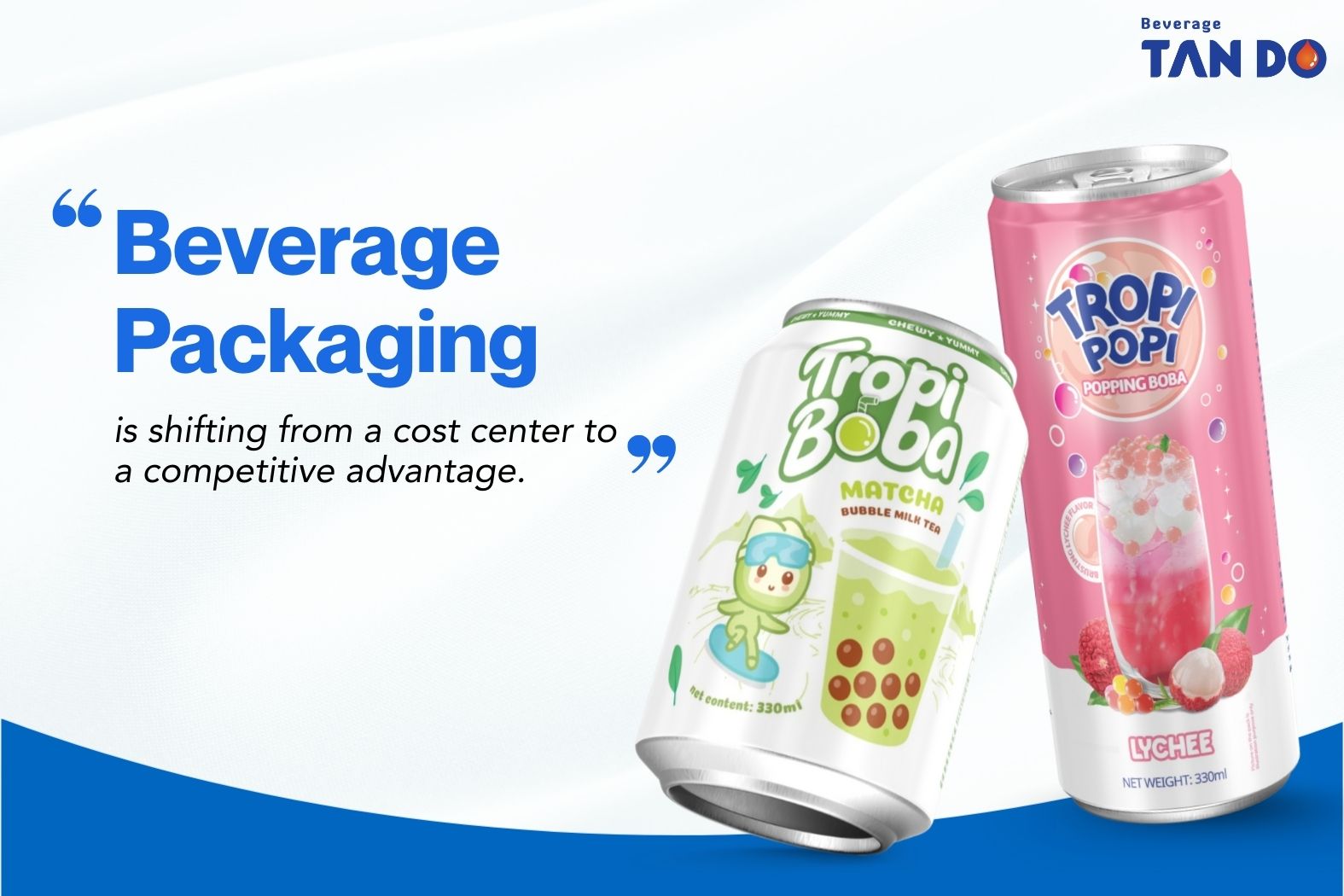
In the beverage sector in particular—where packaging volumes are high and consumption cycles are short—even small changes in material selection or weight optimization can generate significant cost and environmental impacts. As a result, leading brands now treat packaging as an integrated system, not a single product.
2. Sustainability moves from messaging to measurable impact
One of the defining characteristics of packaging industry trends in 2026 is the shift from sustainability messaging to data-driven sustainability. Beverage brands are under increasing pressure to demonstrate the real environmental impact of their packaging, rather than relying on marketing-oriented eco labels.
Within this context, RPET (Recycled PET) has emerged as a core material for beverage packaging. RPET is produced from post-consumer recycled PET and helps reduce reliance on virgin plastic while significantly lowering carbon emissions compared to traditional PET. According to TOMRA, RPET plays a critical role in building a circular economy for beverages, particularly when supported by effective collection and return systems.
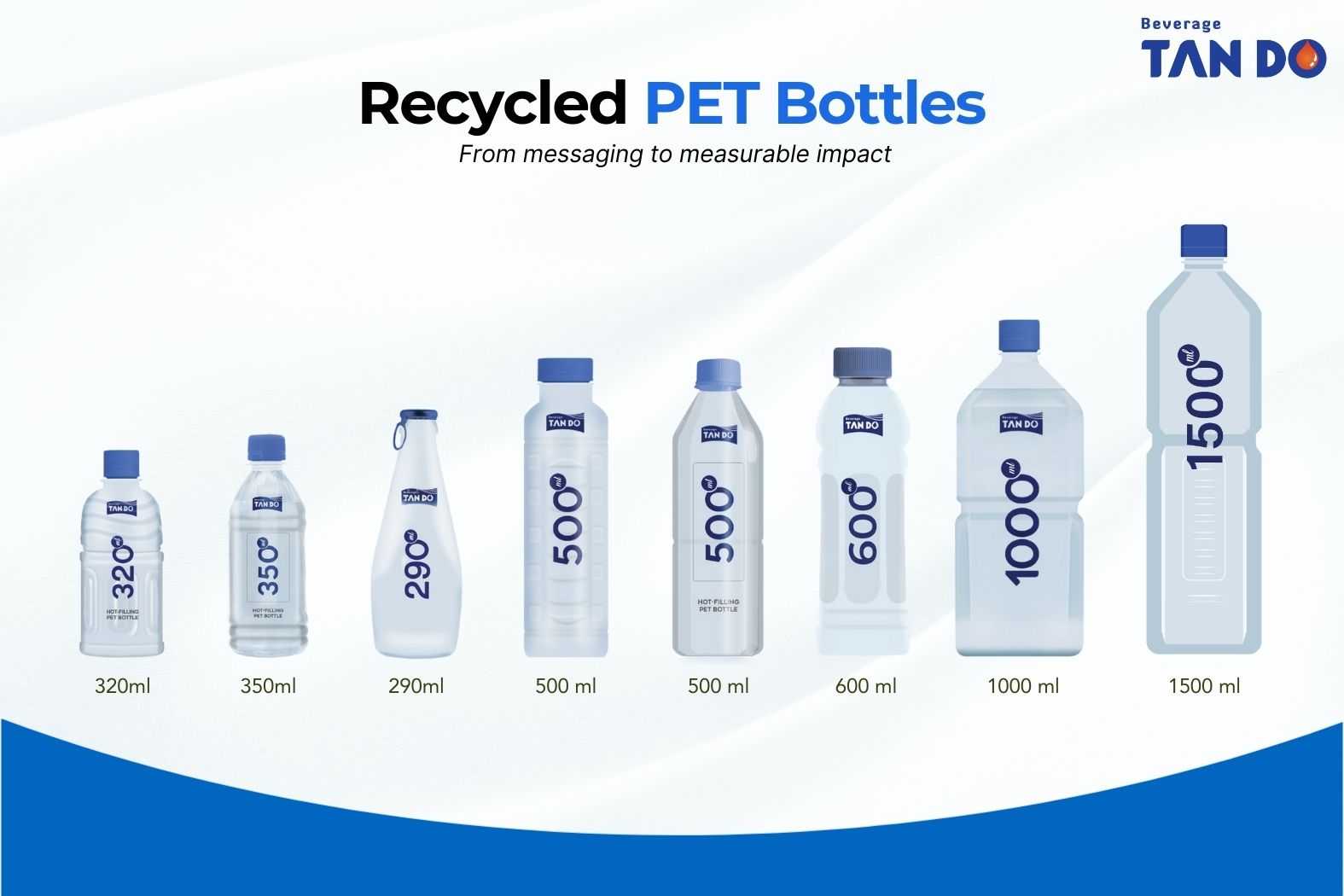
However, the use of RPET cannot be separated from packaging design. Many brands are transitioning toward mono-material packaging structures to ensure real-world recyclability. Optimizing compatibility between the bottle body, cap and label reduces rejection rates during sorting and recycling, which is becoming increasingly important under EPR schemes.
3. EPR regulations and “truth in labeling” are reshaping packaging design
One of the biggest forces reshaping beverage packaging in 2026 is the rise of Extended Producer Responsibility (EPR) laws. In the United States, multiple states — including California, Colorado, Maine, Oregon, Minnesota, Maryland and Washington — have enacted or are implementing EPR laws that require beverage brands to:
- Register with a Producer Responsibility Organization (PRO)
- Report detailed packaging data, including material type, weight and volume
- Pay environmental fees based on recyclability and material composition
These regulations shift responsibility for packaging waste from municipalities to producers, directly linking packaging design decisions with cost and compliance.
At the same time, “truth in labeling” regulations are tightening how on-pack claims like “recyclable” can be used. Under these rules, packaging can only carry recyclable claims if the material is actually accepted and processed by recycling systems in that market; otherwise, such claims are restricted to prevent misleading or greenwashed marketing. Failure to comply may result in fines or regulatory penalties.
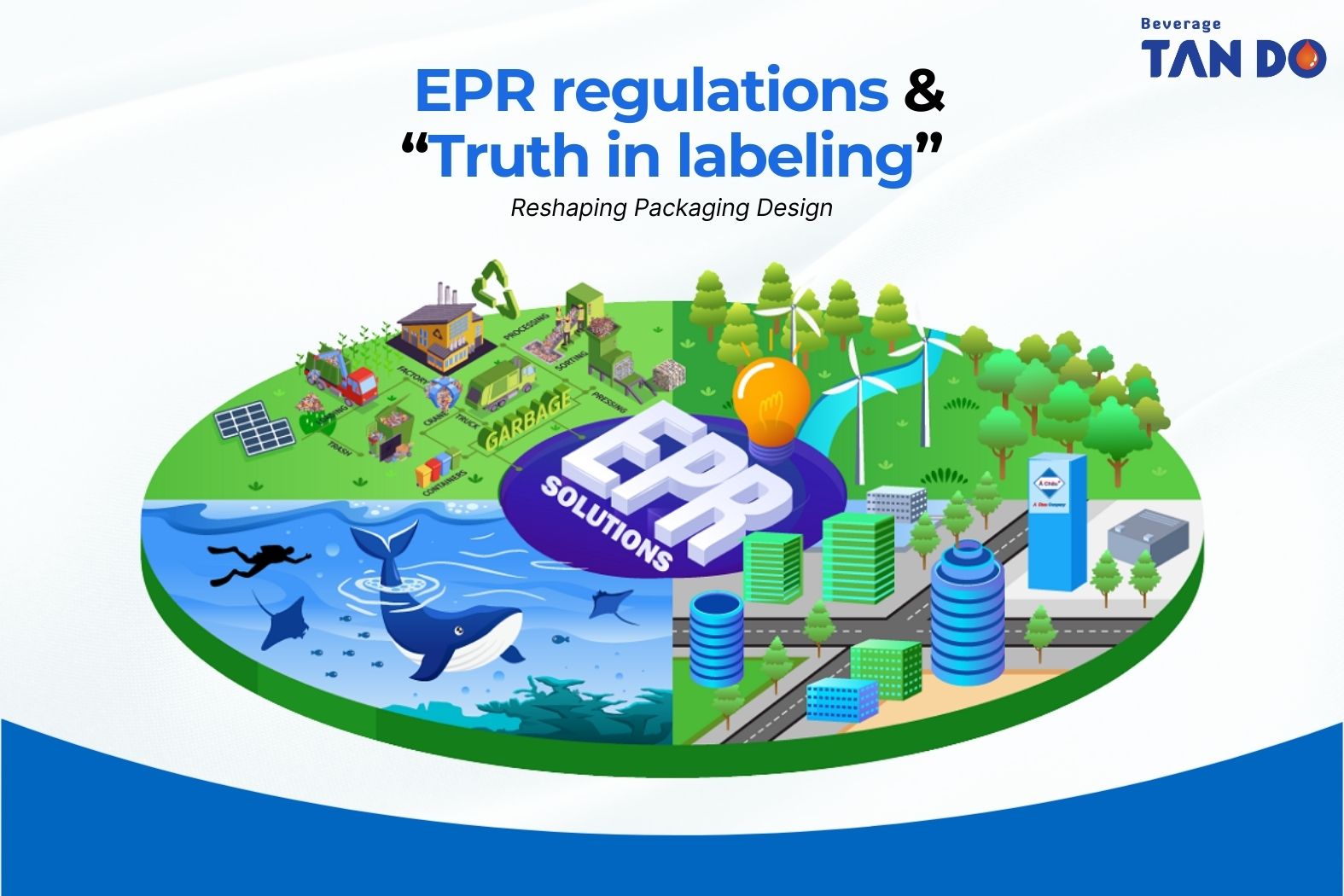
Together, EPR and truth-in-labeling are turning beverage packaging labels from marketing assets into compliance tools. Brands must adopt a compliance-ready mindset from the earliest design stages.
4. The rise of single-serve packaging and mini cans
The beverage industry is shifting toward small-size and single-serve packaging, driven by changing consumption habits and convenience-led retail. Mini cans are increasingly positioned around real consumption occasions rather than traditional pack sizes, making them a powerful growth lever in 2026.
A clear lesson comes from Coca-Cola’s Mini Can strategy (7.5oz / ~222ml). By placing mini cans in convenience stores instead of limiting them to supermarket multipacks, Coca-Cola unlocked impulse purchases, improved price accessibility and expanded consumption occasions.
At Tan Do Beverage, we’ve already offered 180ml can formats, enabling beverage brands and private label programs to respond quickly to market demand.
Why consumers prefer smaller can sizes:
- Portion control: Aligns with the “moderated indulgence” trend, particularly among consumers who are more mindful of sugar intake or using weight-management solutions such as GLP-1.
- Affordability: Lower unit prices reduce purchase barriers and stimulate impulse buying at checkout and convenience channels.
- Convenience: Easy to carry, suitable for on-the-go consumption, workouts, and increasingly used as trial sizes for new flavors.
Together, these factors reinforce the role of mini cans and small-size packaging as a strategic tool—shaping pricing, channel performance and consumer engagement across beverage and private label portfolios.
5. Design evolution: Minimalism, clarity & digital extension
According to GVPAK’s analysis, beverage packaging design trends for 2025–2026 emphasize visual minimalism paired with higher information density. Consumers want to understand product value, origin and environmental impact in seconds. This drives cleaner layouts, restrained color palettes and stronger typographic hierarchy on-pack.
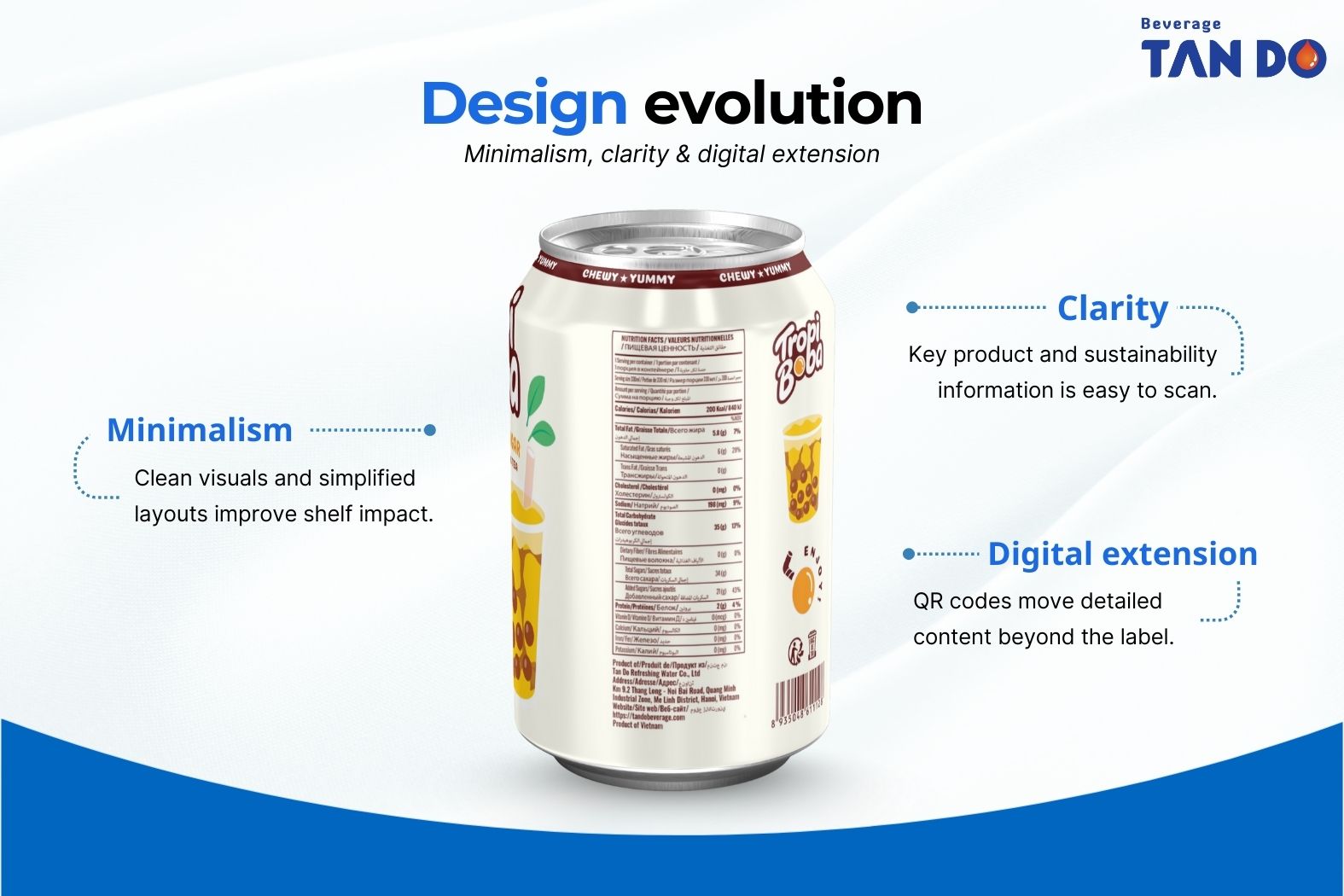
This has accelerated the adoption of smart packaging, particularly QR codes and digital connectivity solutions. Rather than overcrowding labels, brands are extending communication into digital environments, where they can provide detailed sustainability data, location-specific recycling guidance and interactive brand experiences.
In an era of increasing transparency requirements, this approach allows packaging to remain visually clean while still being informationally complete.
6. Automation and flexible manufacturing as competitive advantages
Automation and digital printing are irreversible trends shaping the packaging industry toward 2026. For beverage brands, where product life cycles are short and SKU counts are high, manufacturing flexibility and precise quality control are critical success factors.
Advanced production technologies enable packaging suppliers to respond quickly to private label demand, seasonal launches or market testing without driving up inventory costs. This capability is especially important as private label continues to emerge as a major growth driver in food and beverage.
7. Private label packaging as a growth engine for beverage brands
Private label is no longer just a cost-driven option—it is a strategic growth engine powered by packaging innovation and sustainable beverage packaging trends. Today, retailers and brand owners expect private label beverages to compete with national brands in quality, design and environmental performance.
This shift creates a new role for beverage manufacturer. Brands no longer choose partners solely for manufacturing capability. They select partners that support the entire packaging journey, from materials and compliance to format innovation and labeling accuracy.
At Tan Do, we help beverage brands turn packaging complexity into a competitive advantage. As a private label beverage manufacturer with scalable manufacturing capabilities, we support:
- Custom beverage concepts and labels
- Compliant, data-ready materials and labeling
- Sustainable packaging solutions, including RPET and recyclable material systems
- Flexible packaging formats, such as single-serve and mini cans (including 180ml)
- Design and production that align with both market trends and regulatory realities
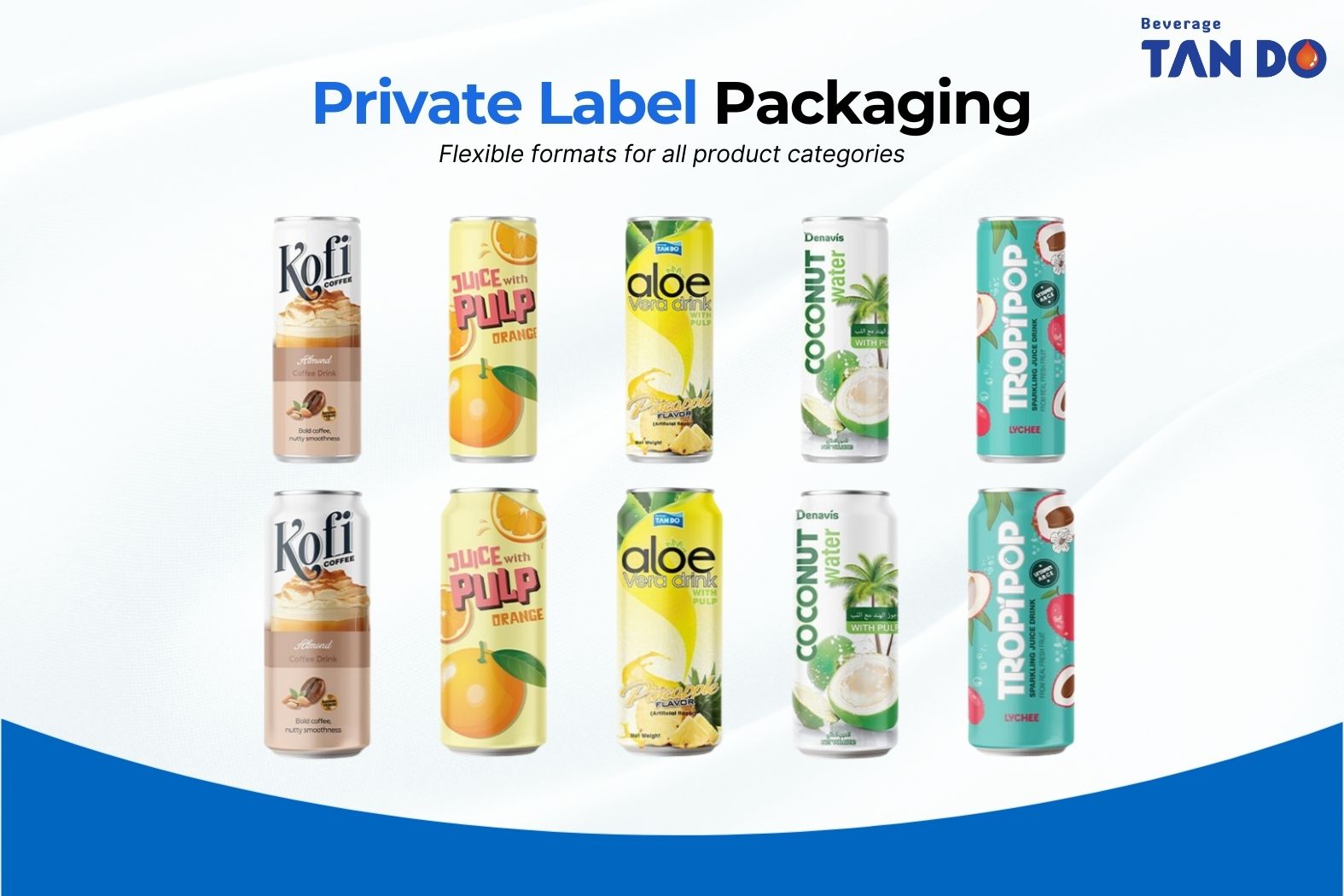
From concept to market-ready execution, Tan Do delivers integrated packaging solutions built for growth, compliance and sustainability.
Sum Up
Beverage packaging trends in 2026 sits at the intersection of sustainability, regulation, technology and consumer experience. Brands that continue to treat packaging as a secondary consideration will struggle in an increasingly transparent and tightly regulated market.
In contrast, companies that view packaging as strategic infrastructure gain a clear long-term advantage. This advantage becomes even stronger when they collaborate closely with capable packaging partners like us!
You may also like
Top Trends for Private Label Beverages in 2026 – Tan Do
Choosing Your Beverage Factory: OEM/ODM Checklist for Global Brand Scale – Tan Do