Supply chain and beverage distribution have become critical success factors in today’s highly competitive beverage market. With the ready-to-drink (RTD) segment valued at around USD 361 billion in 2024, competition is only increasing. Such a large and fast-growing market creates significant opportunities for beverage distributors, retailers, and drink companies all over the world.
For start-up drink brands, knowing where to start, what to prioritize, and how to avoid costly mistakes can be challenging. That’s why in this blog, we break down practical beverage distribution strategies designed specifically for start-up drink brands.
1. Start with a Solid Business Plan
Define your brand strategy & Cost structure
Just like any other business, a beverage company needs a clear, well-thought-out business plan before entering the market. Your business plan acts as a roadmap for funding, production, and distribution growth.
Key questions to address include:
- What is your brand positioning: value-driven or premium quality?
- What makes your product unique in its category?
- Who is your target customer?
- How will your distribution grow over time (local → regional → national)?
- What is the cost of goods sold (COGS)?

If you haven’t created a business plan yet—or feel unsure about how to write one—the most straightforward approach is to use business plan software. Start by completing the sections where you already have answers, and refine the rest as your understanding develops.
Finalize your formula & financial projections early
One critical recommendation is to finalize your commercial formula first. Without knowing the exact cost of ingredients, it is impossible to accurately calculate your COGS. A finalized formula allows for realistic pricing and margin planning.
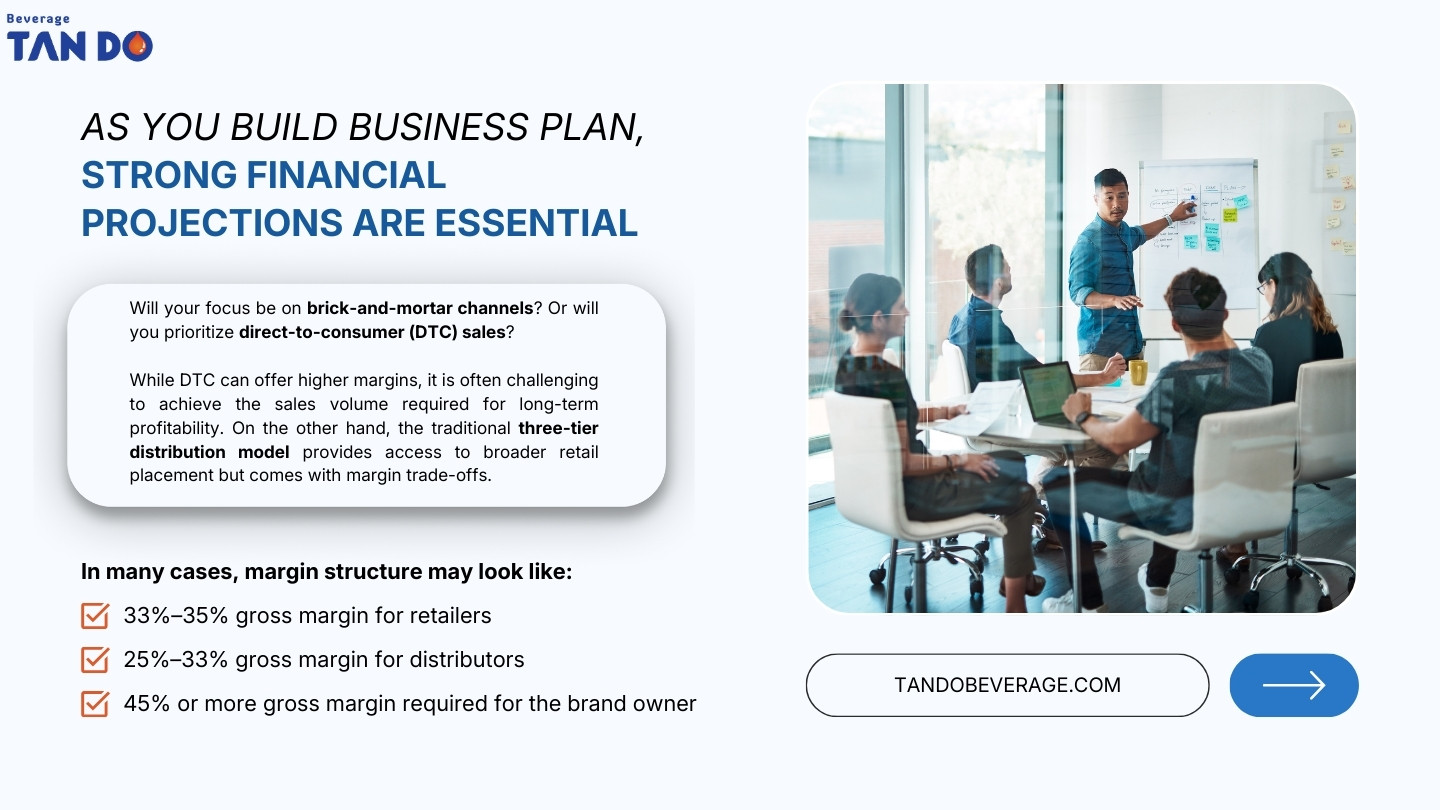
As you build your business plan, strong financial projections are essential. These projections should clearly show healthy margins and sufficient funding to carry the business through to profitability.
Plan Sales Channels & Beverage Distribution Margins
You’ll also need to decide where your beverage will be sold and how it will be marketed. Will your focus be on brick-and-mortar channels such as grocery stores, restaurants, and bars? Or will you prioritize direct-to-consumer (DTC) sales?
While DTC can offer higher margins, it is often challenging to achieve the sales volume required for long-term profitability. On the other hand, the traditional three-tier distribution model provides access to broader retail placement but comes with margin trade-offs.
In many cases, margin structure may look like:
- 33%–35% gross margin for retailers
- 25%–33% gross margin for distributors
- 45% or more gross margin required for the brand owner
Although your business plan will evolve over time, having a clear and well-structured roadmap from the start is invaluable. It strengthens your funding strategy, guides operational decisions, and supports sustainable growth as your beverage brand scales.
2. Building a Strong Food Safety Plan
Keeping up with food safety and health regulations is never easy. That’s true across the entire food industry, but it becomes even more critical when you’re working with your product. Every beverage business must be compliant before entering retail or wider beverage distribution channels.
As your brand grows, especially if you plan to scale production or sell into new markets, food safety expectations only get higher. Many beverage brands eventually need certifications such as FDA registration, BRC, FSSC 22000, or HALAL. These certifications go beyond basic compliance; they make it much easier to work with distributors, retailers, and international buyers who need proof that your operation meets recognized standards.
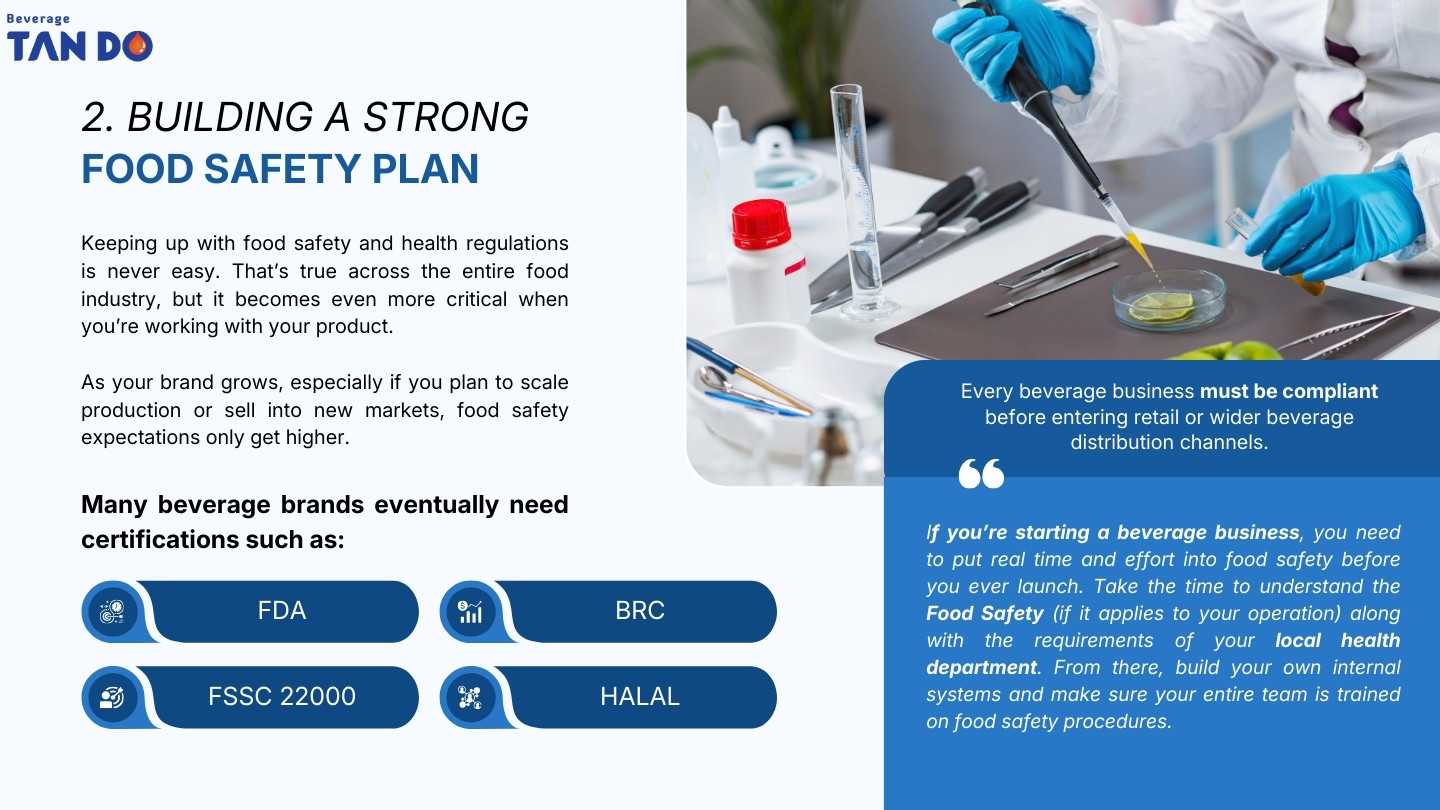
Here’s the bottom line: If you’re starting a beverage business, you need to put real time and effort into food safety before you ever launch. Take the time to understand the Food Safety Plan (if it applies to your operation) along with the requirements of your local health department. From there, build your own internal systems and make sure your entire team is trained on food safety procedures.
Taking food safety seriously from the start puts you in a much stronger position when inspections and audits happen. More importantly, it protects your product, your customers, and your brand reputation—saving you from costly problems later and setting your business up for long-term growth.
3. Choose the Right-Sized Machine from the Start
Going for a smaller, cheaper juicing machine when you’re just starting out might seem like the smart and “safe” choice—sometimes it even feels like the only option you can afford. But surprisingly, this decision can easily turn into one of the biggest mistakes you’ll make in your start-up journey.
Why smaller machines can cost you more?
Many founders think that saving on equipment at the beginning will help protect cash flow. In reality, a machine that’s too small for your actual production needs ends up draining your time, energy, and efficiency—and often costs you more in the long run.
The reason? Small machines take much longer to produce the same amount of juice compared to properly sized equipment. To keep up with demand, you’ll find yourself running the machine for extended hours—and in many cases, literally juicing late into the night just to fulfil orders.
On top of that, smaller equipment means more frequent preparation. Instead of prepping larger batches of produce, you’re constantly washing, cutting, loading, and pressing smaller volumes. That extra prep and press time quickly eats into your day and distracts you from other important parts of the business—like talking to distributors, growing sales channels, or refining your marketing strategy.

So what to do instead?
For start-up drink brands, instead of simply choosing the cheapest option, here’s what you should do:
-
Forecast demand early by estimating production needs for the next 12–24 months, not just launch volume
-
Select equipment based on your distribution goals, not short-term budget limits
-
Choose machines with room to scale, slightly above current demand
-
Calculate total operating costs, including labor, run time, energy, and product loss
-
Work with experienced beverage manufacturers to match equipment to your beverage distribution strategy
4. Use Big Data to Build Smarter Beverage Distribution
In the early days, many beverage start-ups rely on gut instinct, limited sales feedback, or distributor conversations to make distribution decisions. While this can work at a very small scale, it quickly becomes risky as your product range grows and your distribution network expands. At that point, data stops being optional and starts becoming essential.
Big data in beverage distribution doesn’t have to mean complex systems or expensive software. In practice, it starts with information you already have access to, such as:
- Sales performance by channel and region
- Order frequency from distributors and retailers
- Inventory levels across warehouses and points of sale
- Seasonal patterns, weather impacts, and promotional activity

Forecast demand
When this data is tracked consistently and reviewed regularly, it allows brands to forecast demand more accurately, reducing both overproduction and stockouts. For beverage brands, where shelf life and logistics costs matter, this alone can make a meaningful difference to profitability.
Fine-tune distribution strategies
Another major advantage of using data is the ability to fine-tune distribution strategies by channel and geography. Not every product performs the same way in every market. Some SKUs may move quickly in convenience stores but slowly in large-format retail, while others perform better in foodservice or online. Data helps identify these patterns early, so adjustments can be made before inefficiencies become costly.
Operational and logistics optimization
Big data also plays a critical role in operational and logistics optimization. By understanding sell-through rates, inventory turnover, and delivery cycles, brands can align production schedules and transportation planning more closely with real demand. This typically leads to:
- Lower excess inventory and write-offs
- Reduced warehousing and emergency freight costs
- Fewer out-of-stock situations at retail
Spot risks and opportunities
Beyond efficiency, data helps brands spot risks and opportunities sooner. Shifts in consumer demand, underperforming distributors, pricing pressure from retailers, or regional volatility can all be detected through performance trends rather than discovered too late through missed sales.
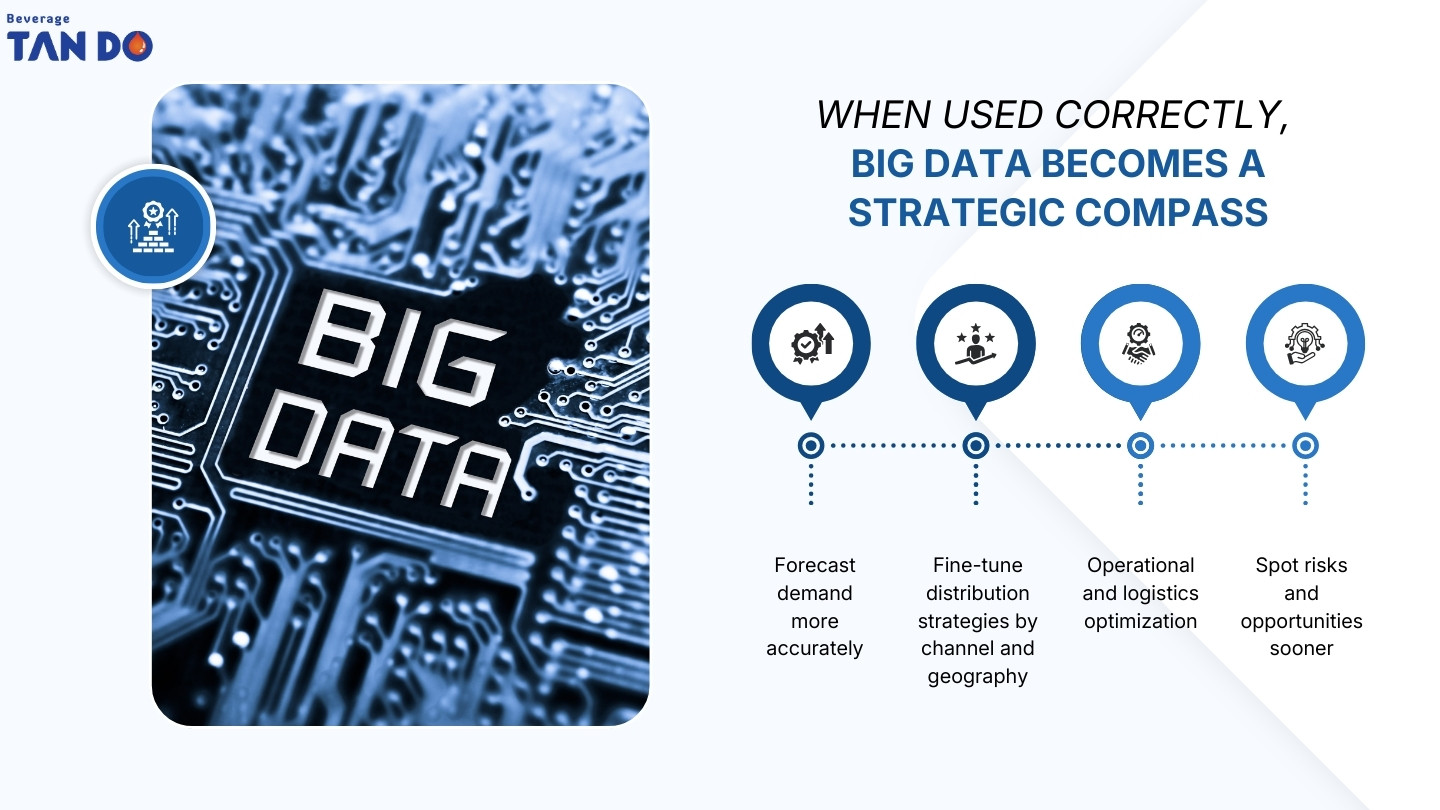
For beverage start-ups, the key takeaway is simple: don’t wait until you scale to start using data. Begin with the numbers you already have, build a habit of reviewing them, and make small data-driven decisions early. As the business grows, more advanced tools can be layered in naturally.
Big data does not replace industry experience or strong relationships, but when used correctly, it becomes a strategic compass. It helps beverage brands distribute more efficiently, manage costs more effectively, and scale into new markets with greater confidence and control.
5. Use Sample and Pilot Batches as a Smart Distribution Strategy
For start-up drink brands, jumping straight into large-scale production is one of the fastest ways to take on unnecessary risk. Before investing heavily in inventory and distribution, a pilot or sample batch phase is a much smarter approach.
Gather honest feedback & Refine your formula
Producing small test batches allows new brands to see how their drinks perform in real-world distribution situations. These samples can be shared with distributors, retailers, foodservice partners, or early customers to gather honest feedback. In many cases, this feedback reveals small but important adjustments—such as sweetness level, acidity balance, aroma, or mouthfeel—that can significantly improve market acceptance.
Test fit for the intended distribution channel
Pilot batches also help start-up brands test whether a product truly fits its intended channel. A drink that works well in direct-to-consumer sales may need refinement before entering retail shelves, where shelf life, consistency, and flavor stability become even more critical.

By using pilot production as part of your distribution strategy, start-up drink brands can validate demand, refine products based on real feedback, and move into larger-scale distribution with more confidence and better control over cost and quality.
6. Partnering with Tan Do Beverage – A Smart Choice for Beverage Distribution
For many beverage brands—especially start-ups and emerging players—distribution challenges often begin long before products reach the shelf. Issues with cost structure, scalability, compliance, or inconsistent supply can quickly slow growth if the right manufacturing partner is not in place.
This is where partnering with Tan Do Beverage makes a real difference.
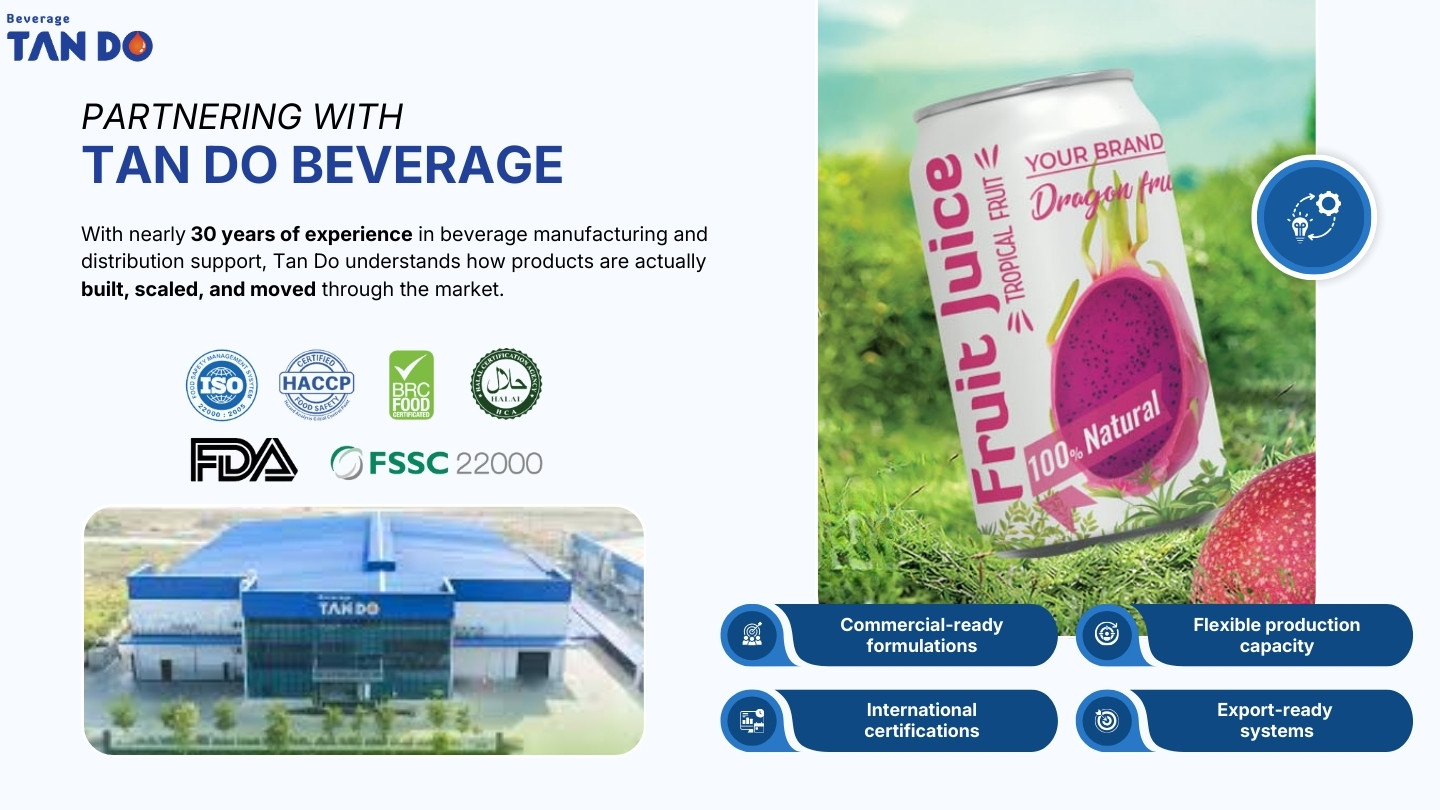
With nearly a decade of experience in beverage manufacturing and distribution support, Tan Do understands how products are actually built, scaled, and moved through the market. The team works closely with brands from the early development stage, helping ensure formulations, packaging formats, and production plans are aligned with real-world distribution requirements.
Tan Do’s strength goes beyond production. By supporting brands with:
- Commercial-ready formulations optimized for cost and stability
- Flexible production capacity to support growth across channels
- International certifications that meet distributor and retailer requirements
- Export-ready systems designed for regional and global distribution
Most importantly, Tan Do operates as a long-term partner—not just a manufacturer. The focus is on helping beverage brands build sustainable distribution models that balance cost control, product quality, and scalability. That’s why working with us is a smart choice for brands looking to build efficient, compliant, and scalable beverage distribution from day one!
Sum up
Beverage distribution is the foundation of long-term success for start-up drink brands. From early business planning and food safety compliance to equipment selection, data-driven decision-making, and pilot production, every step directly impacts how efficiently products reach the market.
By building a clear distribution strategy and working with the right partners, beverage brands can control costs, reduce risk, validate demand, and scale sustainably in an increasingly competitive beverage landscape.