Consumers today care more about what they drink. They want to know where ingredients come from, how products are made, and how they affect health and the environment. Because of this shift, the Non-GMO label has become an important standard in the beverage industry.
For beverage brands, adopting the Non-GMO label is not just a trend. It is a smart business decision. It helps build trust, show responsibility, and prove product quality.
This blog will delve into the meaning of the “Non-GMO” label, its importance for the beverage industry, and how brands can leverage this advantage!
Understanding the “Non-GMO” label: More than just a crtification
Non-GMO stands for “Non-Genetically Modified Organism.” It refers to products or ingredients that do not use components derived from genetically modified organisms (GMOs).
GMOs are plants or living organisms whose genetic material has been altered using genetic engineering techniques.
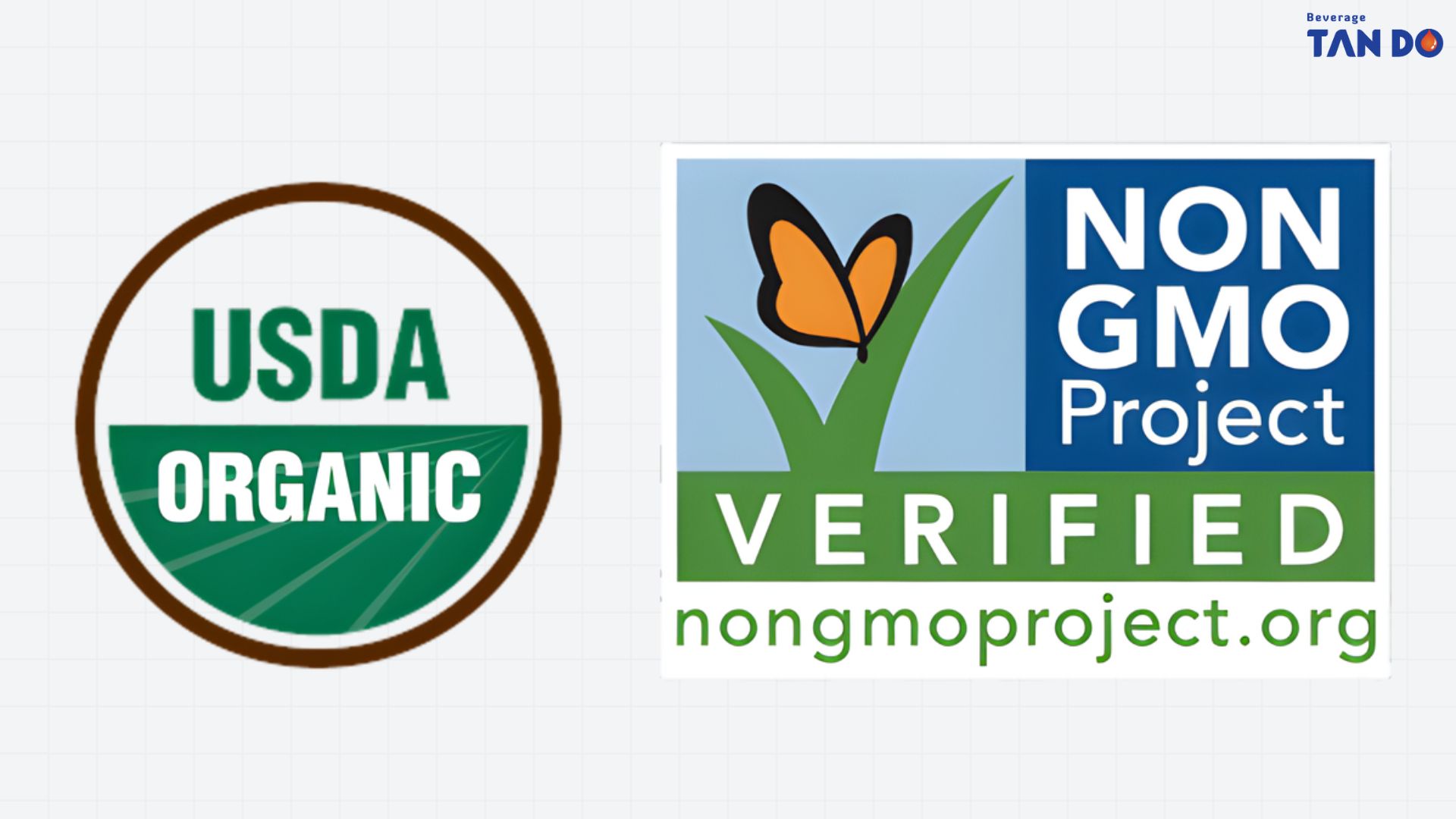
The Non-GMO standard focuses specifically on avoiding genetically modified ingredients. This is different from the Organic label, which covers a broader set of farming and production rules.
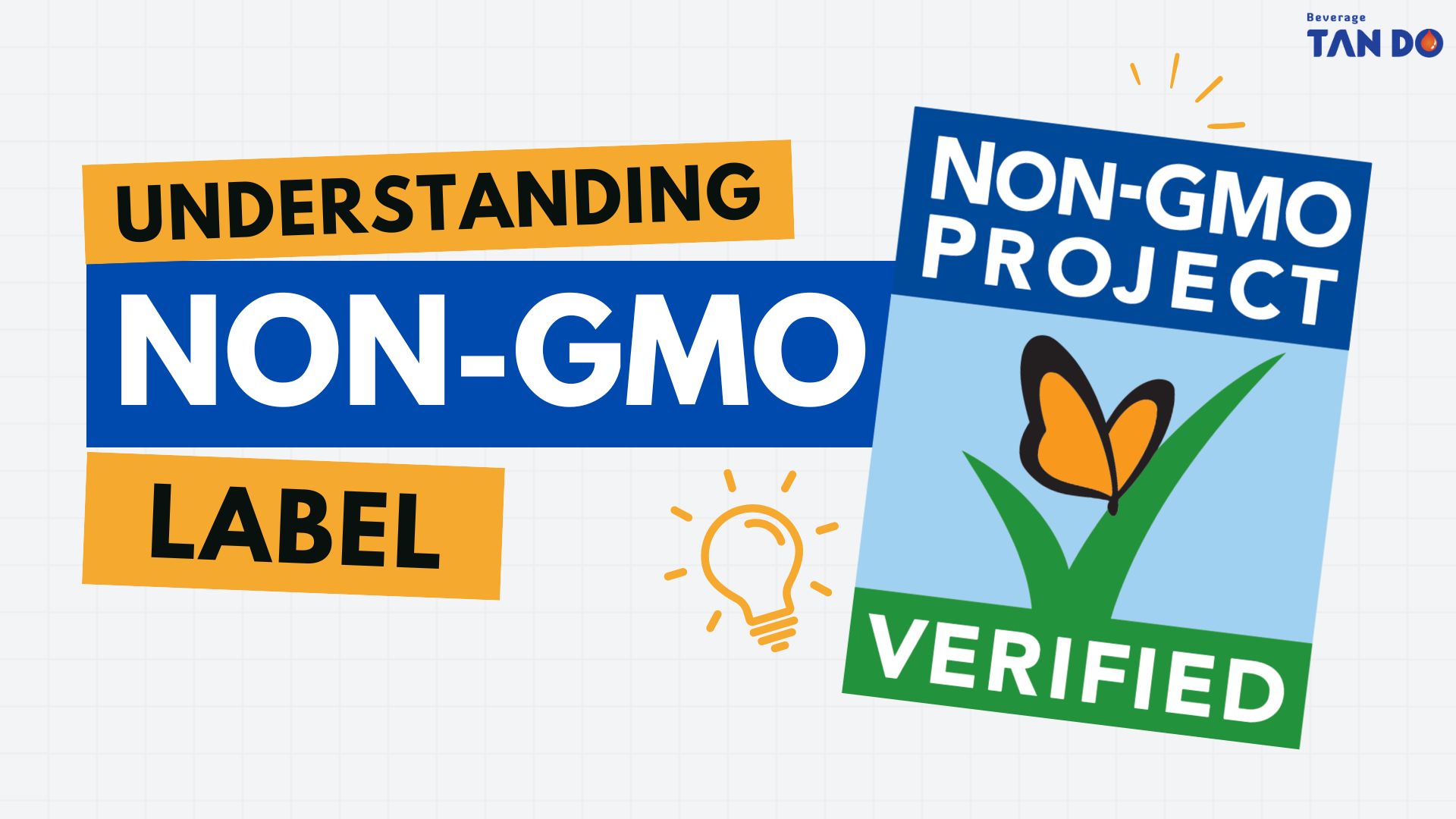
One of the most recognized verification bodies is the Non-GMO Project, a non-profit organization that provides independent Non-GMO verification services.
Products carrying the Non-GMO Project Verified label (featuring a butterfly logo) have completed a comprehensive verification process. This process examines the entire supply chain, including seed sourcing, farming, transportation, processing, and final production.
To maintain certification, brands must implement strict GMO avoidance standards, conduct risk assessments, and undergo regular testing. These requirements help ensure product integrity and build consumer trust.
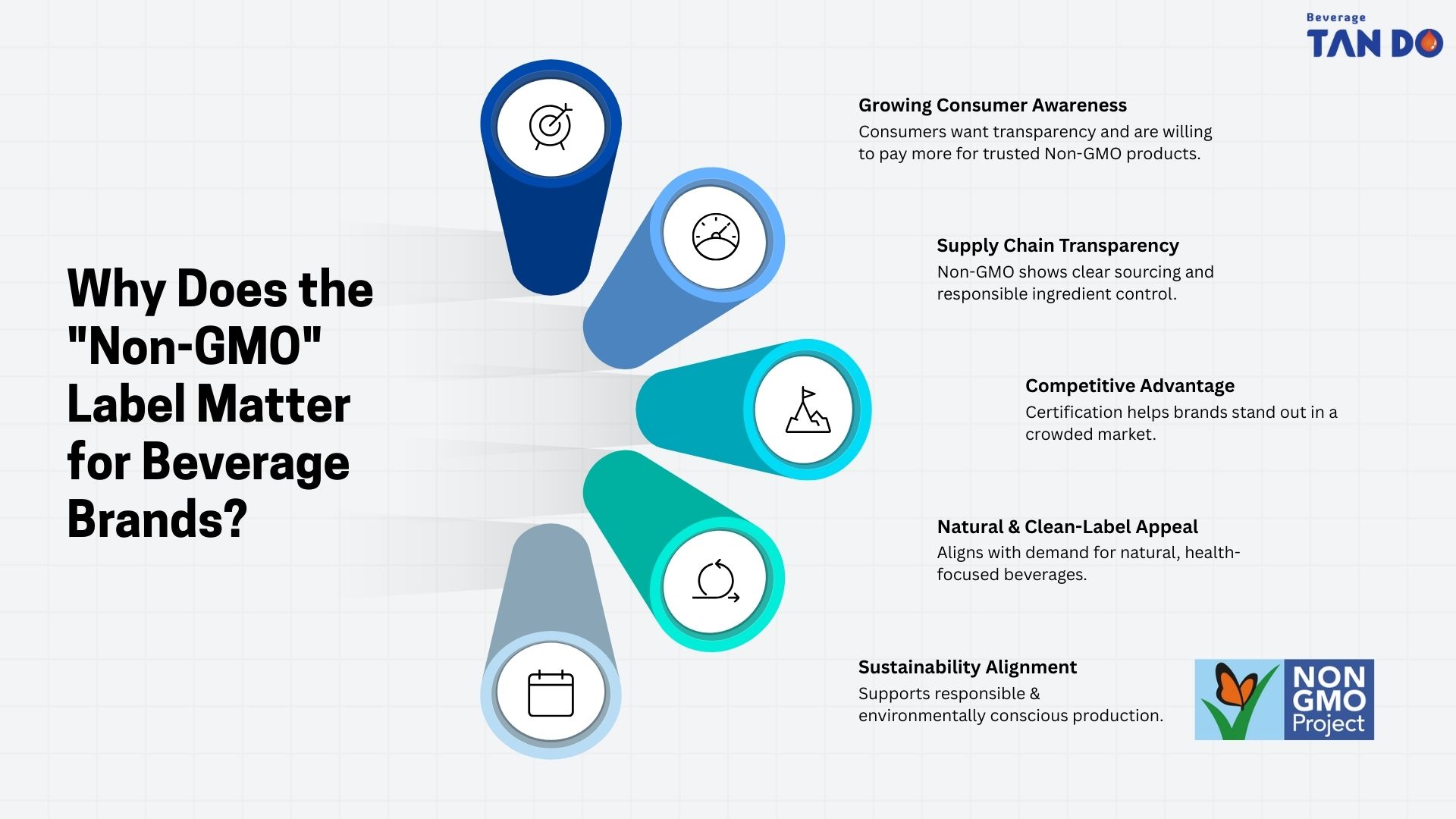
Why does the “Non-GMO” label matter for beverage brands?
2026 promises to be a year where transparency, health, and sustainability continue to shape consumer purchasing behavior, especially in the beverage industry.
1. Growing consumer awareness
Today’s consumers are not just interested in taste and price. They want to understand product origins, production processes, and health benefits of a product.
Surveys from the Non-GMO Project shows that many consumers recognize the Non-GMO Project Verified label. Many are also willing to pay more for verified products compared to unverified claims.
Consumers often see Non-GMO products as safer and more natural. Whether or not the science supports every belief, perception strongly influences buying decisions.
2. Demand for supply chain transparency
With advancements in technology and increased access to information, consumers can easily learn about the origins of product ingredients. Beverage brands with “Non-GMO” labels send a strong message about their supply chain transparency, demonstrating their commitment to controlling raw materials and thereby building stronger customer trust.
3. Distinct competitive advantage
The beverage market is increasingly competitive, with new brands launching every year across functional, plant-based, and ready-to-drink categories. In this crowded environment, differentiation is critical. The Non-GMO label provides a clear and credible way to stand out.
Unlike unclear claims like “natural,” a Non-GMO certification gives clear proof that the product does not use genetically modified ingredients. It shows that the brand is transparent about where its ingredients come from and how they are sourced.
4. Meeting natural health standards
Many consumers seek “natural” and “clean-label” products. The exclusion of GMO ingredients is a crucial part of the definition of “natural” for a significant segment of consumers. “Non-GMO” beverage products can appeal to health-conscious consumers looking for healthier options.
5. Alignment with sustainability trends
While “Non-GMO” focuses on biotechnology, it often goes hand-in-hand with commitments to sustainable and responsible agriculture. Many “Non-GMO” products also prioritize environmentally friendly farming practices, resonating with consumer trends concerned about a product’s environmental footprint.
Organic vs. Non-GMO: What’s the Difference
It is crucial to differentiate between “Organic” and “Non-GMO” labels:
Organic label
Organic certification in the United States is regulated by the USDA National Organic Program that encompasses a holistic approach to farming and food production.
This standards prohibit the use of GMOs, synthetic pesticides, herbicides, fertilizers, artificial hormones, and antibiotics. The focus is on ecological balance, conservation, and the use of substances and methods that are compatible with natural principles.
Non-GMO label
This label specifically addresses the presence of genetically modified ingredients. While a product labeled “Organic” is inherently “Non-GMO,” a “Non-GMO” product is not automatically “Organic.”
A “Non-GMO” product may have been grown using conventional farming methods that include synthetic inputs, as long as the final ingredients are not genetically modified.
The potential for consumer confusion necessitates clear communication strategies from brands. Educating consumers about what each label signifies and how they contribute to product quality and safety is paramount.
Challenges & Opportunities for beverage brands
Challenges:
- Cost: Obtaining “Non-GMO Project Verified” certification can be expensive, involving verification fees, supply chain management costs, and traceability requirements.
- Traceability: Ensuring the entire supply chain, from raw materials to finished goods, complies with “Non-GMO” standards requires close collaboration with all supply chain partners.
- Consumer Misunderstanding: Efforts are needed to educate consumers about the true meaning of the “Non-GMO” label and how it differs from other labels.
Opportunities
- Increased Customer Loyalty: Consumers who trust transparent and responsible brands are more likely to make repeat purchases.
- Market Expansion: Accessing market segments sensitive to GMOs and high-demand international markets.
- Positive Brand Image: Establishing the brand’s position as a high-quality, ethical producer committed to consumer health.
- Product Innovation: Encouraging innovation in the search for and use of unique, healthier, and environmentally friendly alternative ingredients.
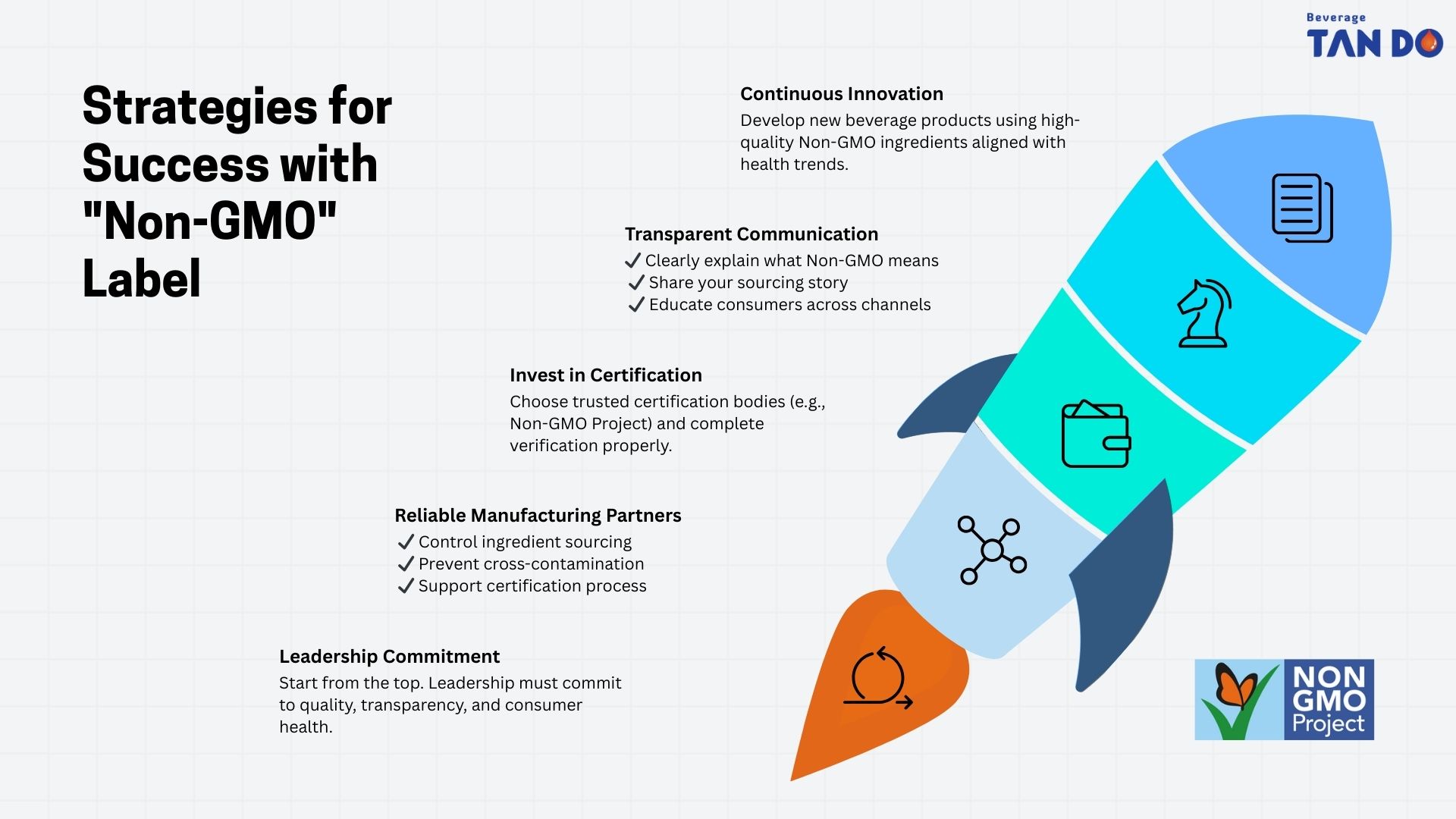
Strategies for Success with the “Non-GMO” Label in 2026
To maximize the benefits of the “Non-GMO” label, beverage brands need a comprehensive strategy:
1. Leadership Commitment
The decision to adopt the “Non-GMO” label should begin at the highest leadership level, demonstrating a commitment to quality and consumer health.
2. Choose Reliable Manufacturing Partners
Collaborate with manufacturers experienced and reputable in providing “Non-GMO” products.
- Ingredient Control: Ensure that raw material sourcing (such as fruits, grains, sweeteners) is certified “Non-GMO” or has clear traceability.
- Strict Manufacturing Processes: Manufacturers must have control procedures to prevent GMO cross-contamination during production.
- Certification Support: Manufacturing partners should have experience assisting brands in obtaining international “Non-GMO” certifications like “Non-GMO Project Verified.”
3. Invest in Certification
Thoroughly research reputable certification bodies like The Non-GMO Project and their requirements. Invest in the verification and licensing process.
4. Transparent and Creative Communication
- Explain the Meaning: Clearly explain on packaging, websites, and marketing materials the significance of the “Non-GMO” label and its benefits to consumers.
- Tell the Story: Share the journey of sourcing “Non-GMO” ingredients and the brand’s commitment to quality and health.
- Utilize Diverse Channels: Leverage social media, blogs, email marketing, and advertising campaigns to reach and educate consumers.
- Build a Community: Create a community of consumers interested in healthy and sustainable food, where your brand can interact and share values.
5. Innovative Product Development
Explore and develop new product lines using unique “Non-GMO” ingredients that meet the latest culinary and health trends.
Conclusion
In 2026, the “Non GMO” label will be more than just a mark on packaging; it will be a testament to a beverage brand’s commitment to quality, consumer health, and transparency. Proactively adopting and effectively communicating about the “Non-GMO” label will help brands build trust, create a sustainable competitive advantage, and position themselves as responsible leaders in the evolving beverage industry.
This journey requires investment, commitment, and a clear strategy, but the reward is consumer trust and loyalty in a future where “clean” and “transparent” food is increasingly paramount.
Related read: The Future of Beverage: Why Non-GMO Products are Gaining Popularity – Tan Do