The global beverage industry is experiencing a major transformation — and at the center of it stands one dominant force: Ready to Drink (RTD).
Once viewed simply as a convenience option, RTD has evolved into one of the most innovative and fastest-growing segments worldwide. From functional health beverages to premium coffee and canned cocktails, RTD products are no longer just about saving time — they represent lifestyle, performance, and consumer empowerment.
But what exactly is driving the rise of ready to drink? And why is this category outperforming traditional beverage formats?
Ready to Drink: From convenience to cultural shift
In its early stages, ready to drink was built around one core promise: ready-made convenience. Consumers wanted beverages that required no preparation. Open the bottle, drink, and go.
But what began as a convenience solution has evolved into something much bigger.
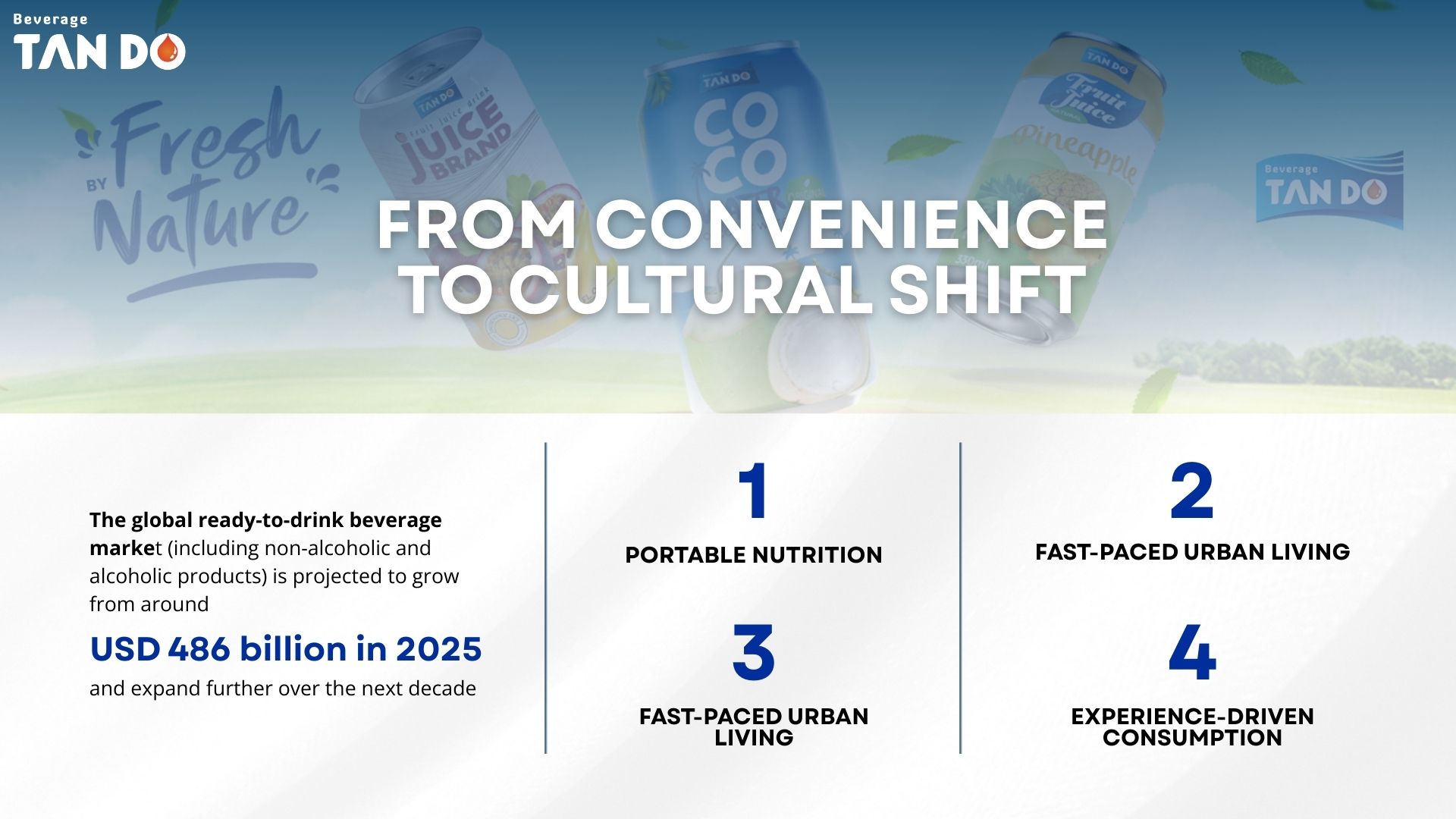
According to market forecasts, the global ready-to-drink beverage market (including non-alcoholic and alcoholic products) is projected to grow from around USD 486 billion in 2025 and expand further over the next decade, reflecting steady CAGR expansion as consumer preferences evolve.
This shift reflects more than convenience, it reflects wider cultural changes. As urbanization accelerates, hybrid work models become normal, and health-driven lifestyles emerge, RTD has moved from optional to essential.
Today, RTD aligns with:
- Fast-paced urban living
- Portable nutrition
- Functional wellness
- Experience-driven consumption
It has become embedded in daily routines — from morning cold brew to post-workout protein to evening relaxation drinks. This is no longer about packaging. It is about behavior.
Health-conscious consumers fuel the growth
One of the biggest catalysts behind the rise of ready to drink is the global shift toward healthier consumption. Increasingly, consumers evaluate beverages not just for taste or convenience, but for ingredient quality, health impact, and functional value.
Modern consumers are now far more label-conscious. They actively check:
- Sugar levels
- Ingredient lists
- Presence of artificial additives
- Nutritional benefits and functional claims
This behavior has pushed brands to innovate rapidly. According to market data, health-inspired product development — including low-sugar or zero-sugar formulas, natural sweeteners, and clean-label ingredients — is a major influence on RTD offerings, with nearly half of RTD demand driven by on-the-go and health-oriented motivations
The new generation of ready to drink beverages focuses on:
- Low sugar or zero sugar formulas
- Natural sweeteners
- Clean-label ingredients
- Functional additives like vitamins, collagen, probiotics, and adaptogens
Ready to drink is no longer just refreshment, it’s becoming a daily wellness solution that supports specific health or lifestyle goals.
Functional beverages redefine the category
Performance-driven beverages are now dominating innovation pipelines across regions.
Functional ingredients, adaptogens, and enhanced formulations are reshaping product development. Global functional RTD beverage launches grew ~18% in 2023–24, as brands move beyond basic hydration to wellness-focused products.
- Energy drinks have evolved from high-sugar stimulants into cleaner, functional energy and performance drinks, with new product formulations containing botanicals, fibers, and nootropics already entering major retail channels.
- Meanwhile, RTD protein beverages — once primarily for athletes — are now marketed as convenient meal replacements and satiety options for mainstream consumers.
- Relaxation beverages designed to support stress management and mood balance are also emerging as part of the broader functional beverage boom, aligning with growing interest in wellness-oriented drinks that go beyond hydration.
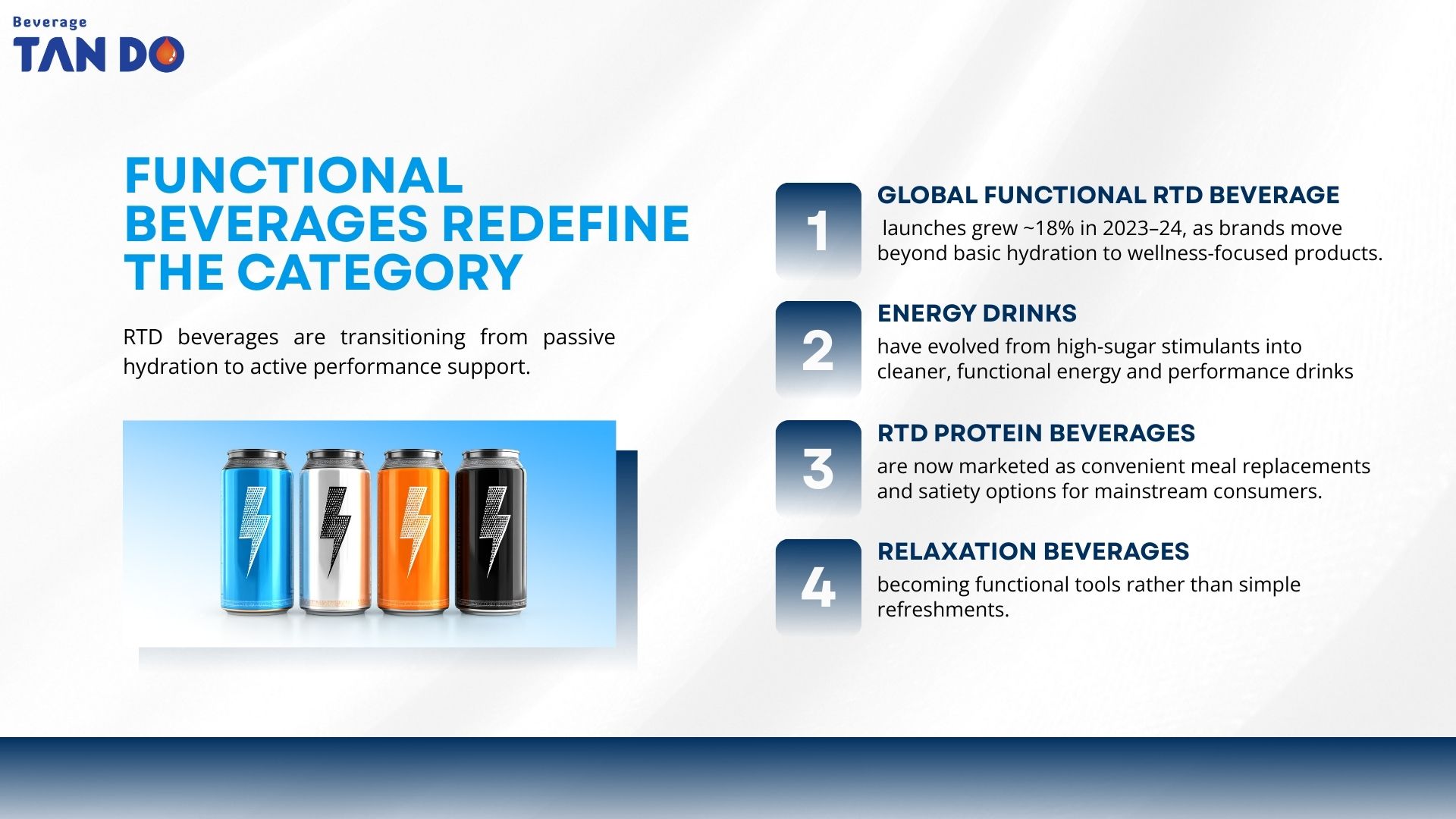
This evolution signals a key shift: RTD beverages are transitioning from passive hydration to active performance support — becoming functional tools rather than simple refreshments.
Premiumization & Brand experience
Another defining trend is premiumization.
Consumers are increasingly willing to pay more for premium RTD products that offer quality, experience, and identity. Premiumization now underpins significant market demand, reflected in trends where elevated formats — specialty cold brews, exotic fruit blends, and craft-style canned cocktails — attract premium price points and loyal fanbases.
Market research shows that consumers not only accept but prefer premium RTD products, with innovation in flavor complexity, packaging appeal, and narrative storytelling helping brands differentiate themselves in a crowded market.
Premiumization reflects a broader industry movement: beverages are no longer commodities, they are experiences.
Brand storytelling, aesthetics, and lifestyle alignment now influence purchase decisions as strongly as price.
Sustainability is now a competitive requirement
The rise of RTD coincides with heightened environmental scrutiny.
Globally, consumers are integrating sustainability into purchase decisions. Many beverage innovation launches now emphasize recyclable packaging, reduced plastic usage, or carbon-conscious sourcing .
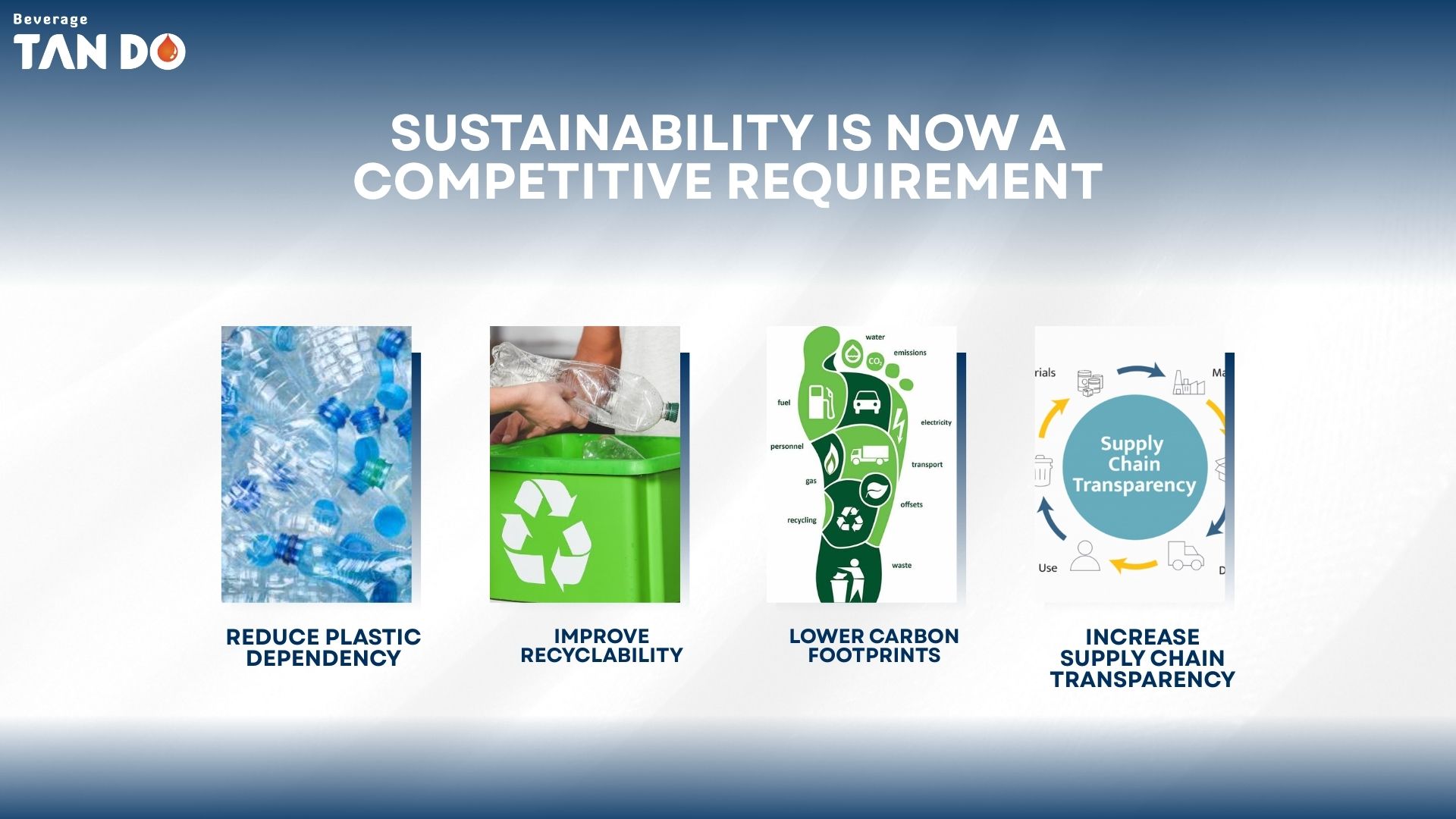
Brands are under pressure to:
- Reduce plastic dependency
- Improve recyclability
- Lower carbon footprints
- Increase supply chain transparency
This shift is reinforced by the growth of eco-conscious packaging solutions within the RTD segment. For example, the RTD packaging market — valued at approximately USD 171 billion in 2025 — is evolving toward sustainable formats and smart materials by 2035. It reflects both regulatory and consumer demand for environmentally responsible products
In many markets, sustainability now influences purchasing behavior as strongly as price or flavor, especially among younger demographics who prioritize environmental impact.
Related read: 5 Beverage Packaging Solutions for Sustainable Brand Growth
The global expansion of RTD
While North America historically led RTD innovation, growth is now geographically diversified.
According to recent market forecasts:
- Asia-Pacific leads the global RTD landscape, accounting for over one-third (approximately 35–36%) of total market share in 2024–2025, fueled by rapid urbanization, rising disposable incomes, and strong demand for convenient beverage formats.
- North America remains a revenue powerhouse, maintaining the largest absolute market value and demonstrating strong demand for premium, functional, and specialty RTD products.
- Emerging markets in Latin America and parts of Southeast Asia are also seeing accelerated adoption due to growing middle classes and expanding retail networks.
- Urbanization continues to be a macro-driver of RTD demand, as city populations rise and portable, shelf-stable nutrition becomes proportionally more important.
Urbanization remains a macro-driver. As city populations increase globally, demand for portable, shelf-stable, convenient nutrition rises proportionally.
The category is no longer regionally concentrated — it is globally embedded.
Why the rise of ready to drink is far from over
Several macro forces indicate continued expansion for the ready to drink category:
- Global urban population growth
- Rising disposable income in developing economies
- Digital marketing accelerating brand discovery and niche targeting
- Growing demand for convenient nutrition
- Advancements in formulation and shelf-stability technology
Market forecasts consistently show robust mid-to-high single digit growth through the late 2020s across mainstream RTD segments.
RTD is not a short-term trend. It represents a structural redefinition of how beverages are produced, positioned, and consumed.
Strategic implications for beverage brands
For beverage companies, the rise of RTD is not just a growth opportunity, it is a capability test. To succeed, brands increasingly need to work with a reliable beverage manufacturer that can turn ideas into market-ready products quickly and consistently.
As a trusted partner, Tan Do Beverage offers end-to-end support — from formula development and product design to scalable production and quality assurance .
Winning in this category requires:
- Fast product development and reformulation
- Strong R&D for functional and consumer-preferred drinks
- Flexible manufacturing that can scale with demand
- Custom taste adaptation for different regions
- Integration of sustainable packaging solutions
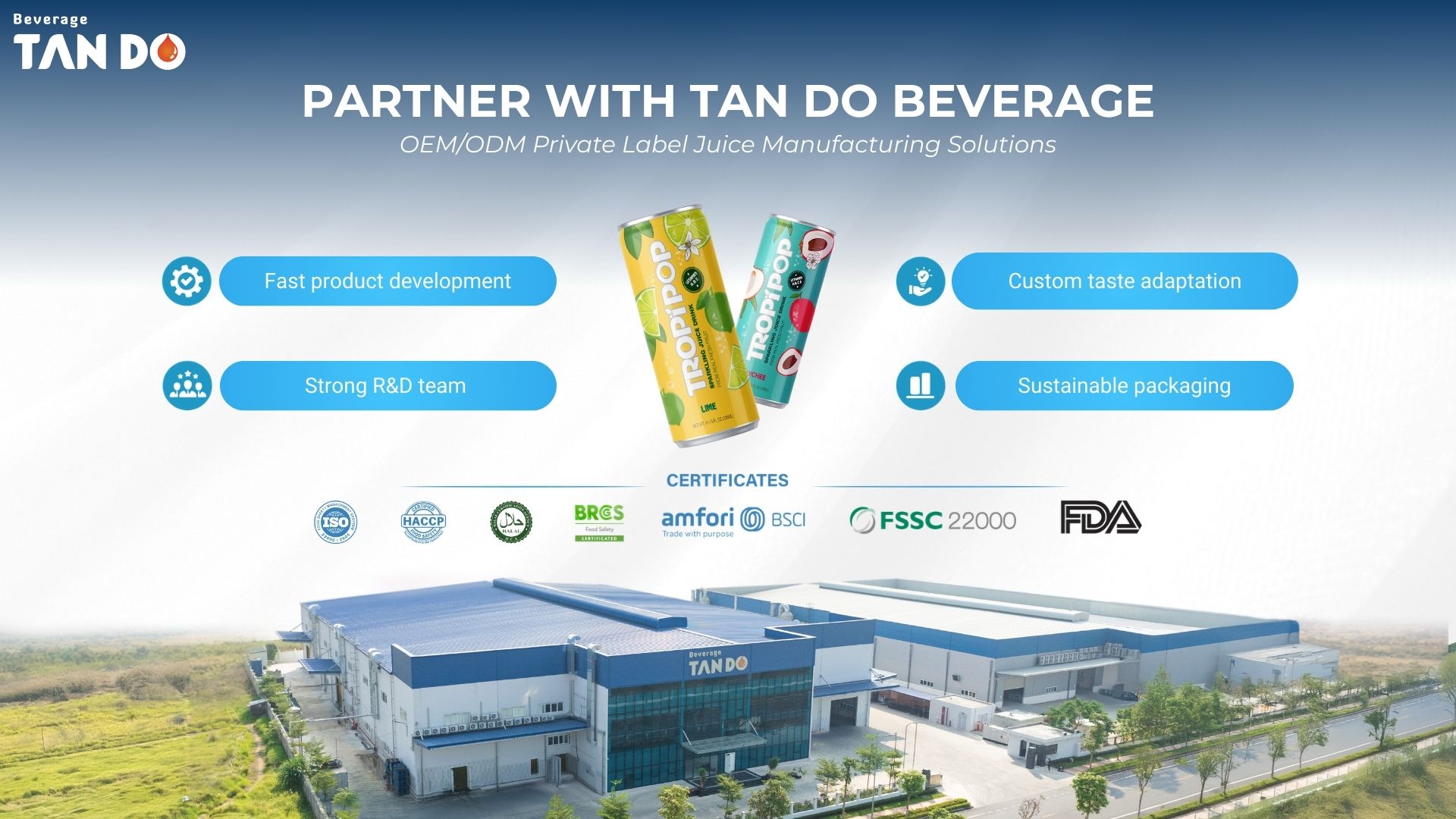
Brands that collaborate with an experienced beverage manufacturer will be able to launch products faster, maintain quality, and adapt to changing trends.
Those that treat RTD as “just another SKU” risk falling behind — while those who invest in strong manufacturing partnerships will lead the next phase of global beverage growth.
Sum up
Ready to drink beverages are no longer driven by convenience alone. They reflect a structural shift in how consumers approach health, mobility, and daily performance. From functional nutrition to premium experiences, RTD has become embedded in modern lifestyles worldwide.
As urbanization and wellness awareness continue to rise, brands that innovate in formulation, sustainability, and consumer insight will lead the next phase of global beverage growth.