Coconut milk coffee isn’t just a trendy drink—it’s a delicious way to upgrade your daily cup. When people look for the best coconut milk for coffee, they’re usually searching for one thing: creaminess without dairy. And coconut milk delivers exactly that.
With its smooth texture, gentle coconut aroma, and naturally dairy-free profile, coconut milk has become a versatile ingredient across modern coffee applications—from specialty lattes to bottled cold brew. For brands, cafés, and manufacturers alike, choosing the right coconut milk is now part of delivering a premium coffee experience.
What is Coconut Milk
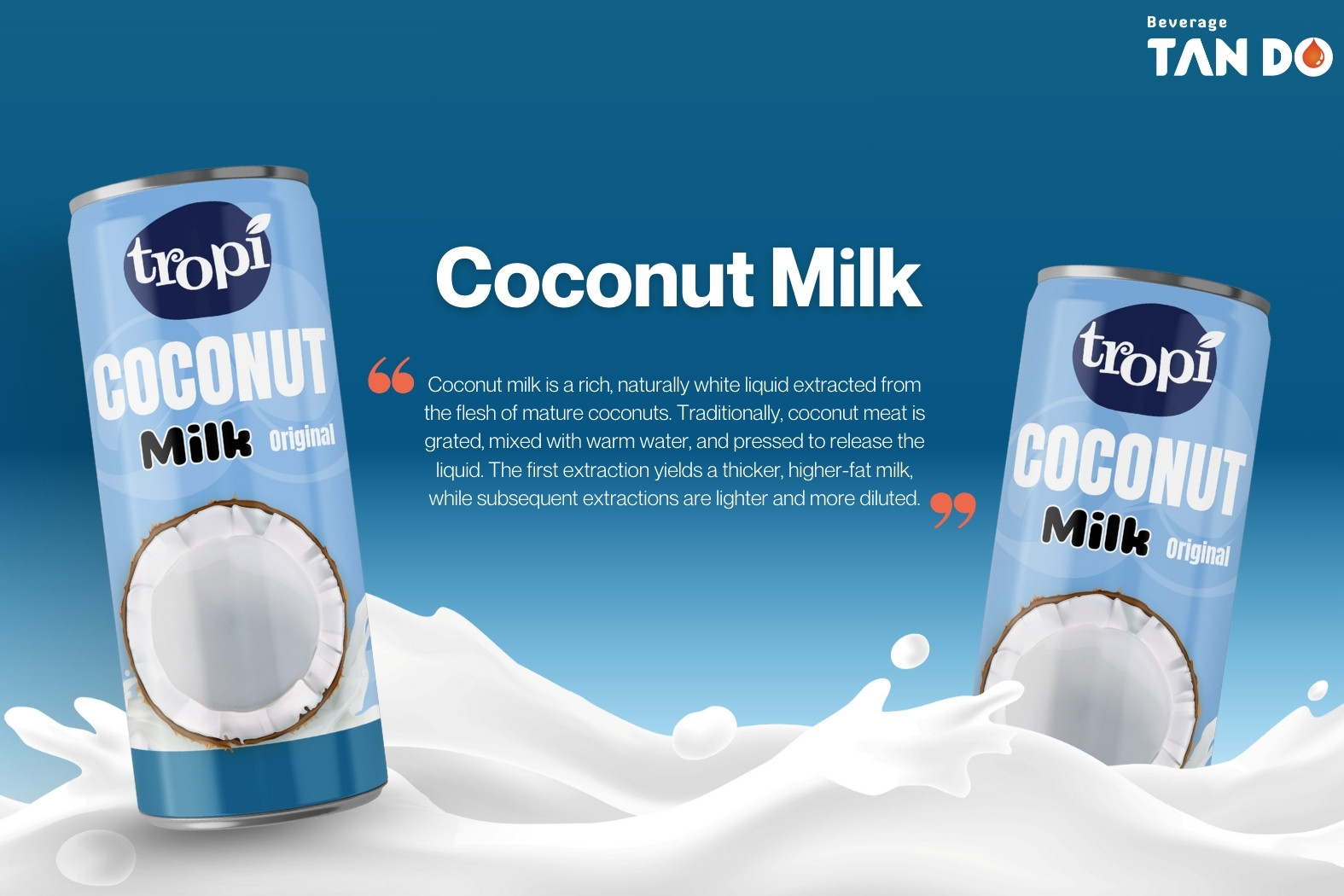
Coconut milk is a rich, naturally white liquid extracted from the flesh of mature coconuts. Traditionally, coconut meat is grated, mixed with warm water, and pressed to release the liquid. The first extraction yields a thicker, higher-fat milk, while subsequent extractions are lighter and more diluted.
This natural composition gives coconut milk its signature creamy mouthfeel and subtle sweetness—without the need for dairy. From a formulation perspective, these characteristics make coconut milk particularly well suited for coffee, where texture, stability, and flavor balance all play a critical role.
If you’re interested in its nutritional and functional properties, you can explore more here.
Why Coconut and Coffee Work So Well Together
Coffee and coconut might sound like an unexpected pair, but they actually make a great team—and there’s a reason why many baristas consider coconut milk the best choice for coffee applications.
Coconut milk has a mild, naturally sweet flavor that helps soften coffee’s bitterness. It’s plant-based and dairy-free, making it suitable for a wide range of drinkers. Coconut also carries strong associations with freshness and tropical vibes—perfect for adding something new to classic coffee drinks.
Most importantly, coconut milk performs well across multiple formats: hot coffee, iced beverages, and ready-to-drink applications. For brands looking to innovate while maintaining familiarity, coconut milk offers a low-risk, high-reward solution.
Best Coconut Milk for Coffee
With so many options on the market, choosing the best coconut milk for your coffee can feel overwhelming. Texture, flavor balance, and heat stability all matter—especially when coffee is involved.
From this perspective, our Coconut Milk Drink is designed to meet the practical needs of coffee applications. Its naturally creamy texture and balanced coconut profile allow it to integrate smoothly into both hot and cold coffee applications—supporting the coffee rather than competing with it.
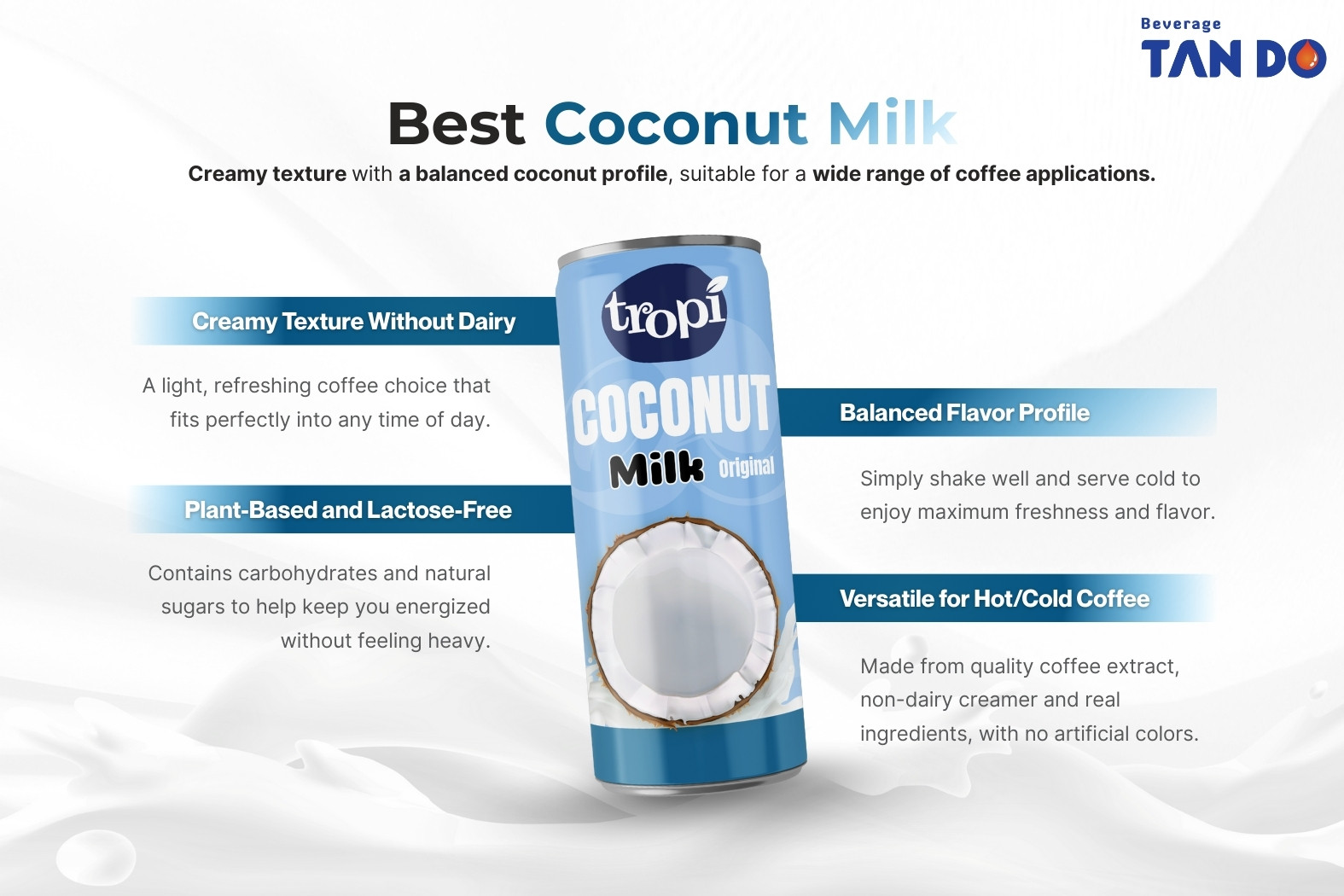
Why You’ll Love Tan Do Coconut Milk:
- Creamy Texture Without Dairy: Tan Do Coconut Milk delivers a rich, full-bodied mouthfeel similar to dairy milk. It creates smooth, satisfying lattes and cappuccinos while staying completely plant-based.
- Plant-Based and Lactose-Free: As a dairy-free alternative, coconut milk is ideal for lactose-intolerant consumers, vegans, and those who prefer plant-based beverages.
- Balanced Flavor Profile: With its mild natural sweetness and subtle tropical aroma, coconut milk helps soften coffee’s bitterness while supporting its aromatic notes. This balance works especially well with light- and medium-roast coffees, where nuanced flavors are more pronounced.
- Versatile for Hot and Cold Coffee: Whether steamed, chilled, or blended, Tan Do Coconut Milk maintains stability and consistency, reinforcing its place as one of the best coconut milk for coffee choices.
Easy Ways to Pair Coconut Milk With Coffee
Not sure where to start? Here are some crowd-pleasing ideas:
1. Coconut Milk Latte
Brew one or two shots of espresso as your base. Gently steam coconut milk until warm and lightly frothy (avoid overheating to prevent separation), then pour it over the espresso just like a traditional latte.
The natural fats in coconut milk create a smooth, creamy texture that closely mimics dairy milk. Its subtle sweetness rounds out espresso’s sharper notes, resulting in a latte that feels rich and comforting without being heavy.
2. Iced Coconut Cold Brew
Fill a glass with ice, pour in cold brew coffee, then add chilled coconut milk to taste. Stir gently until well combined. Sweeteners are optional, as coconut milk already provides a mild natural sweetness.
Cold brew tends to be smoother and less acidic than hot-brewed coffee, and coconut milk enhances that softness even further. The light tropical notes help balance bitterness while keeping the drink refreshing and easy to drink—perfect for warm weather or bottled coffee concepts.
3. Coconut Flat White or Cappuccino
Prepare a shot of espresso, then micro-foam coconut milk using controlled steam pressure to achieve a silky, fine foam. Pour as you would for a flat white or cappuccino, focusing on texture rather than volume.
When properly frothed, coconut milk produces a smooth, velvety foam that lifts aroma and improves overall mouthfeel. This method pairs particularly well with medium-roast espresso, where the coffee’s natural sweetness complements coconut’s creamy richness without overpowering it.
4. Coffee Smoothie Base
Combine strong coffee or espresso with coconut milk, banana, dates, or cacao powder in a blender. Adjust thickness with ice or additional coconut milk as needed.
Coconut milk naturally thickens smoothies while adding healthy fats that help keep the drink satisfying. It creates a balanced coffee smoothie that feels indulgent yet nourishing, making it suitable for breakfast drinks or functional coffee blends.

Pairing Tips for the Best Flavor
- Pick the right roast: Light to medium-roast coffees pair best with coconut milk, as they allow the nuanced sweetness and natural coconut aroma to shine through without being lost under heavy roast flavors.
- Don’t overheat: Coconut milk can separate if overheated, so steam gently when making hot drinks and avoid boiling to maintain smooth texture.
- Taste before sweetening: Many coconut milk products have natural sugar; taste before adding syrups or sugar to avoid over-sweetening.
Storage Tips for Coconut Milk
Once opened, coconut milk should be kept in the refrigerator and is best used within three days, though it can last up to a week. Store it toward the back of the fridge, where it’s coldest.
You can freeze coconut milk, but expect some texture changes. Once thawed, it may look grainy or separated. That’s fine for cooking, but not ideal for coffee or desserts where smoothness matters.
If you see pink, green, or black mold around the edges—time to say goodbye.
FAQs
1. Why does coconut milk separate, and how can it be fixed?
If you open a can and see a solid white layer on top with watery liquid underneath, this is completely normal. Coconut milk is an oil-in-water emulsion, but a naturally unstable one. Over time, coconut oil separates from the water and rises to the top. Because coconut oil contains a high level of saturated fat, it can solidify at cooler temperatures.
To fix this, simply warm the coconut milk slightly and stir it until the mixture becomes smooth again.
2. Does coconut milk change the taste of coffee?
Yes, but usually in a pleasant way. Coconut milk adds a mild natural sweetness and a light tropical aroma that can soften bitterness without masking the coffee’s original character—especially when paired with light to medium roasts.
3. Is coconut milk better than almond or oat milk for coffee?
It depends. Coconut milk offers more creaminess than almond milk, while oat milk foams better. For flavor and mouthfeel, many people still choose coconut as the best coconut milk for coffee—especially iced drinks.
4. How do I stop coconut milk from separating in hot coffee?
Avoid overheating. Heat coconut milk slowly and do not bring it to a boil. Stir or swirl before use, and pour it into coffee at a moderate temperature to maintain a smooth texture.
Final Sip
So, we’ve covered everything you need to know about the best coconut milk for coffee, from why it pairs so well with different coffee styles to how it performs in hot, iced, and blended drinks. With the right coconut milk, you can enjoy a creamy, well-balanced cup without relying on dairy.
If you’re looking for a coconut milk that is easy to work with and consistently coffee-friendly, our coconut milk is a reliable option to consider. Explore Tan Do premium coconut milk to support your coffee formulations and develop differentiated products for retail, foodservice, or private label markets!